

Welding is one of the most demanding trades, combining intense heat, bright light, sparks, and molten metal. Using proper safety gear for welding is essential not only to protect yourself from burns, cuts, and eye injuries but also to maintain focus and confidence on the job. From gloves to helmets and protective apparel, the right equipment keeps welders safe while enabling precise work.
In this guide, we’ll cover everything welders need to know about safety gear from essential items like cotton gloves and leather work gloves to specialized accessories like leather welding rod holders and share practical, hands-on advice for choosing and using these items effectively.
Why Safety Gear for Welding Matters
Welding environments are hazardous by nature. A small misstep can lead to:
- Severe burns from sparks or molten metal
- Eye damage from ultraviolet (UV) light
- Skin irritation or long-term exposure issues
- Hand injuries from hot surfaces or sharp materials
Even experienced professionals can underestimate the importance of comprehensive safety gear. Proper protective equipment reduces risks, improves focus, and prevents costly mistakes or medical emergencies.
Core Components of Welding Safety Gear
Helmets and Eye Protection
- Welding helmets with proper lens shade protect against UV and infrared rays
- Safety goggles can be used under helmets for added protection
- Auto-darkening helmets enhance visibility and reduce fatigue during long projects
Gloves: Cotton and Leather
- Cotton gloves are lightweight, breathable, and good for low-heat tasks or handling non-sparking materials
- Leather work gloves provide heat resistance, cut protection, and durability for higher-risk welding activities
- Choosing the right glove type depends on the specific welding process (MIG, TIG, Stick) and environment
Safety Apparel
- Flame-resistant jackets, aprons, and sleeves protect the torso and arms
- Full-length pants and leather or reinforced boots prevent burns from sparks and slag
- Layering breathable materials under protective clothing helps manage heat and moisture
Accessories: Leather Welding Rod Holders
- Keep welding rods organized and protected from moisture
- Reduce hand fatigue and improve efficiency during repetitive welding tasks
- Durable leather versions last longer than synthetic alternatives
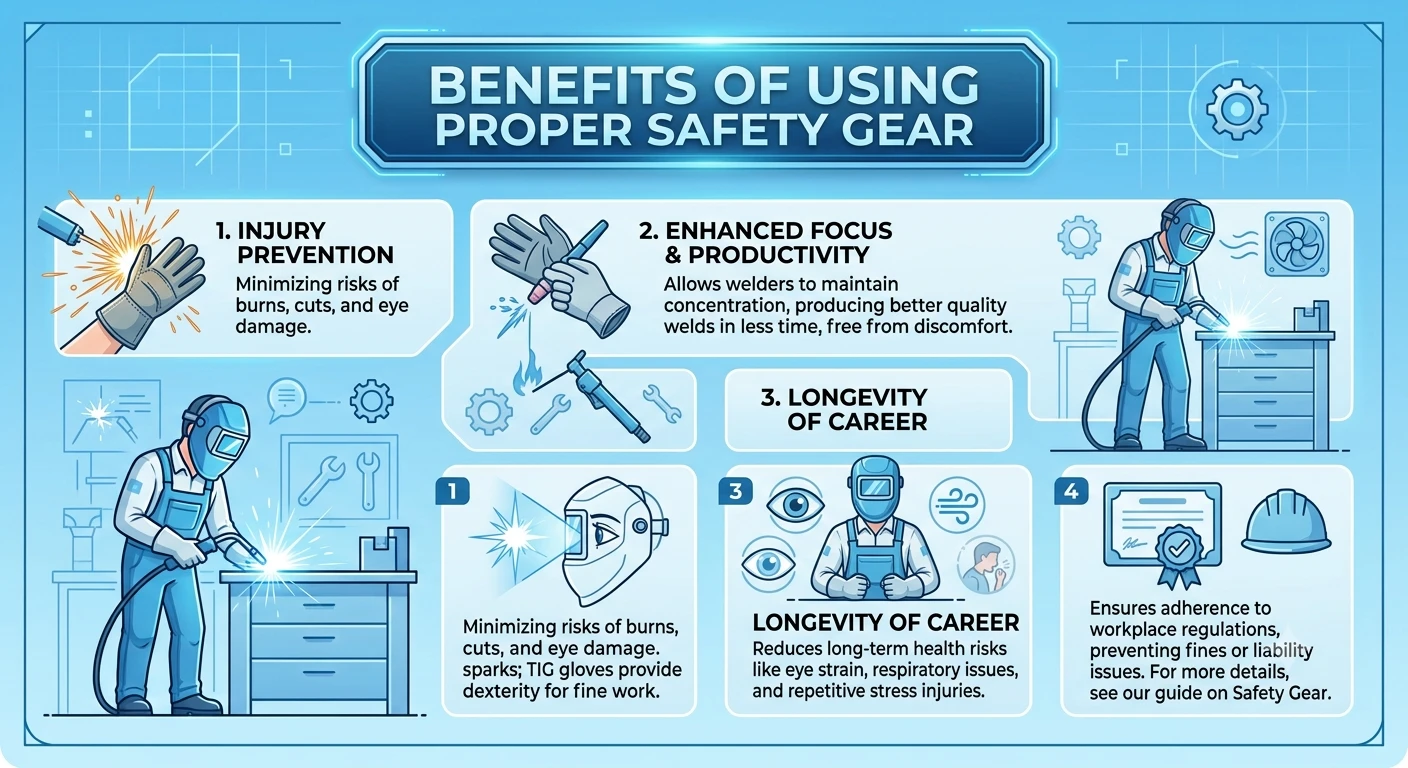
Benefits of Using Proper Safety Gear
1. Injury Prevention
The most obvious benefit is minimizing the risk of burns, cuts, and eye damage. For example, high-quality leather work gloves protect hands from sparks, while cotton gloves offer comfort for light handling tasks.
2. Enhanced Focus and Productivity
Discomfort or distraction caused by heat, sweat, or irritation can compromise work quality. Proper safety gear allows welders to maintain focus, producing better welds in less time.
3. Longevity of Career
Consistently using protective gear reduces long-term health risks such as eye strain, respiratory issues, and repetitive stress injuries.
4. Compliance with Safety Standards
Using approved safety gear ensures adherence to workplace regulations and can prevent fines or liability issues. For more details on compliant protective gear, see our guide on Safety Gear.
Practical Considerations When Choosing Safety Gear
Fit and Comfort
- Ill-fitting gloves reduce dexterity and can increase accident risk
- Helmets that are too heavy or tight can cause neck strain
- Clothing should allow mobility while covering exposed skin
Material Selection
- Leather offers durability and heat resistance but may be heavier
- Cotton provides breathability but less heat protection
- Consider hybrid options for optimal comfort and safety
Task-Specific Gear
- TIG welding requires more precise hand control, favoring thinner leather gloves
- MIG or Stick welding involves more sparks, requiring thicker gloves and full protective apparel
- Outdoor welding may need gear with additional UV and weather protection
Common Mistakes Welders Make
- Skipping gloves for light tasks: Even brief exposure to sparks can cause injuries
- Using worn or damaged gloves: Compromises protection and increases burn risk
- Neglecting proper cleaning: Sweat, dust, and slag buildup reduce effectiveness of gear
- Ignoring accessories: Items like leather welding rod holders improve efficiency and safety
Best Practices from Industry Professionals
- Rotate gloves and wash cotton liners regularly
- Inspect leather gloves and apparel for cracks or thinning
- Store welding rods in protective holders to prevent moisture damage
- Always pair gloves with helmets and appropriate clothing for full coverage
Real-World Examples
Fabrication Workshop
A small fabrication shop implemented mandatory safety gear for welding, including leather gloves and rod holders. Workers reported fewer burns and faster rod handling, leading to a measurable increase in productivity.
Outdoor Welding Project
On a construction site with variable weather, cotton gloves under heavier leather gloves helped manage sweat and maintain grip, preventing slips and minor injuries.
Testimonials
Switching to full safety gear, including leather gloves and rod holders, reduced small injuries instantly.
— Mark H., welder
Using cotton gloves under leather gloves keeps my hands comfortable during long TIG sessions.
— Elena R., fabrication technician
Proper safety apparel makes working outdoors in summer much safer and easier to focus.
— Jason P., construction welder
People Also Ask
What is the most important welding safety gear?
Helmets, gloves, protective clothing, and eye protection are essential for all welders.
Can cotton gloves protect from sparks?
Cotton gloves offer comfort and light protection but are best paired with leather gloves for high-heat tasks.
How often should leather work gloves be replaced?
Replace gloves if they show cracks, thinning, or loss of heat resistance.
What is a leather welding rod holder?
It’s a durable accessory used to safely store and carry welding rods, preventing moisture damage and hand fatigue.
Is safety apparel necessary for short welding tasks?
Yes, even brief exposure to sparks and UV light can cause injuries. Full coverage is always recommended.
Final Thoughts
Effective safety gear for welding isn’t optional it’s a necessity. From cotton gloves to leather welding rod holders, the right combination of gloves, apparel, and accessories protects workers, enhances focus, and supports long-term health. Investing in the proper gear may seem minor, but it makes a substantial impact on safety and confidence during every welding task.
About the Author
Uniqent Editorial Team
Unique Enterprises team has extensive experience working alongside professional welders and industrial technicians. We focus on practical, hands-on advice to help workers stay safe, comfortable, and productive on the job without unnecessary risk.