

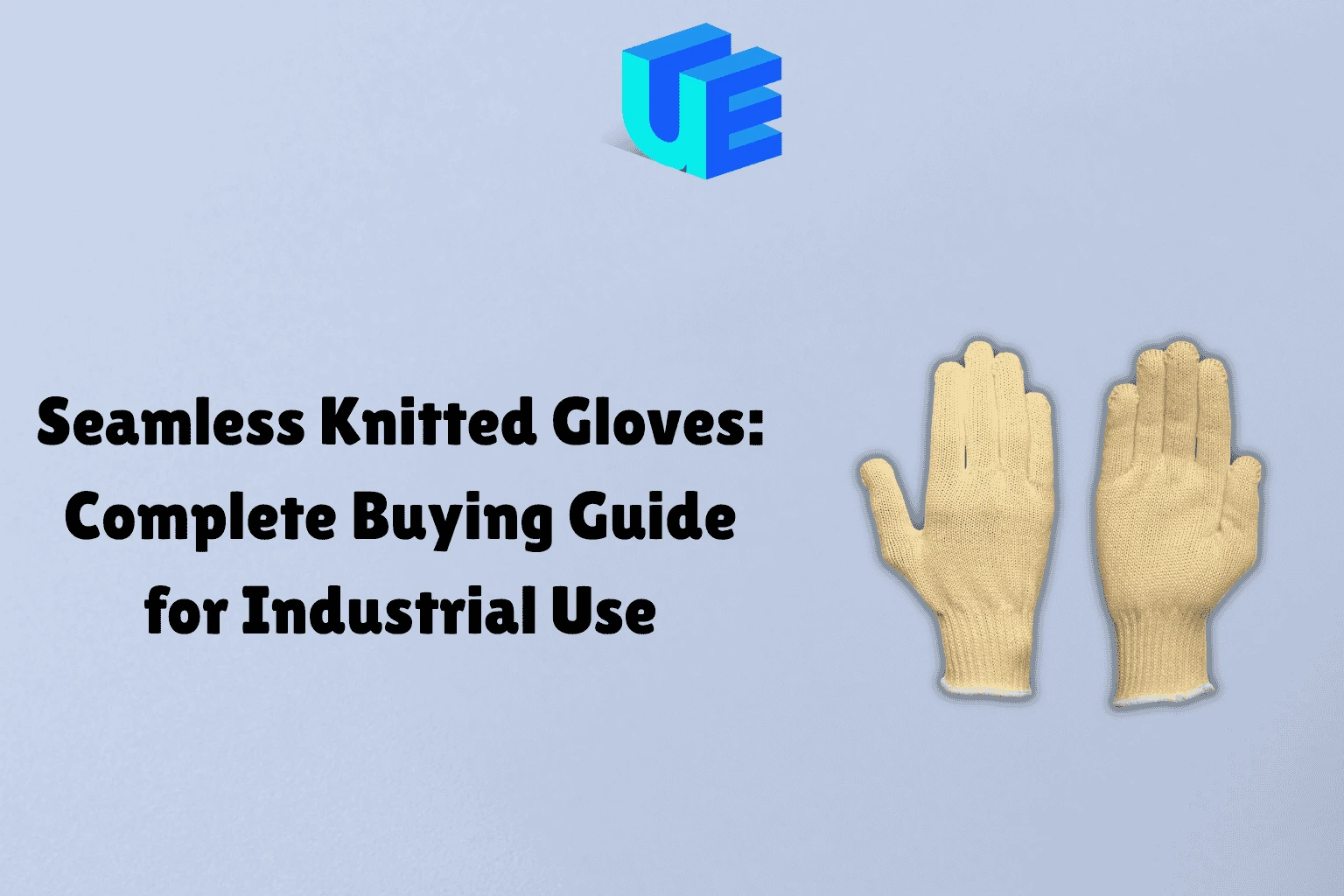
Choosing the wrong work glove doesn’t just cause discomfort it creates real risk. Gloves that fit poorly, degrade quickly, or lack the right material properties for a specific task can contribute to hand fatigue, reduced grip, and in industrial environments, genuine safety hazards. Seamless knitted gloves are one of the most widely used categories of hand protection across manufacturing, assembly, logistics, and general labor but “seamless knitted” covers a wide range of constructions, materials, and performance levels. This guide will help you understand exactly what separates a well-suited glove from a poor fit, and how to make a sourcing decision that holds up in actual working conditions.
What Are Seamless Knitted Gloves?
Seamless knitted gloves are produced on circular knitting machines that form the glove as a single continuous piece of fabric no seams, no stitching lines, no joined panels. The result is a glove with a smooth interior that conforms more naturally to the hand.
This matters more than it might seem. Traditional cut-and-sew gloves have interior seams that run across the palm or fingers. In high-repetition tasks picking, sorting, assembly line work those seam ridges cause friction points that lead to blisters and fatigue over a full shift. Seamless construction eliminates that problem by design.
The “knitted” part refers to the fabric structure: interlocking loops of yarn that give the glove stretch, breathability, and flexibility. Different yarn types cotton, nylon, polyester, blended composites produce different performance characteristics, which is where the real buying decisions begin.
How the Knitting Machine Gauge Affects Performance
Gauge refers to the number of needles per inch on the knitting machine, and it directly determines how fine or coarse the finished glove fabric is.
- 7-gauge — Coarser, thicker fabric. More durable and abrasion-resistant. Used in heavier-duty tasks where dexterity is less critical.
- 10-gauge — A balanced mid-range option. Good durability with reasonable feel. Common in general industrial use.
- 13-gauge — Finer, lighter fabric. Better dexterity and tactile sensitivity. Used in assembly, electronics, and light handling work.
- 15-gauge and above — Very fine construction. Maximum dexterity but lower abrasion resistance. Suited to precision tasks.
Understanding gauge helps you match the glove to the task rather than defaulting to what’s most familiar or cheapest per pair.
Material Options: What the Yarn Actually Determines
Cotton
Seamless cotton gloves are the most widely used option in general industrial and warehouse environments. Cotton is breathable, comfortable for extended wear, and relatively affordable. It absorbs perspiration reasonably well, which reduces hand fatigue in warm environments. The limitation is durability — cotton wears faster under heavy abrasion and doesn’t perform well in wet or oily conditions without a coating.
For light handling, inspection work, and tasks where skin comfort matters more than cut resistance, seamless cotton gloves remain the practical default.
Nylon and Polyester
Synthetic fibers offer better abrasion resistance and shape retention than cotton. They don’t absorb moisture the way cotton does, which can be an advantage in some environments and a disadvantage in others — a glove that doesn’t absorb sweat in a hot warehouse can become uncomfortable quickly.
Nylon and polyester are often used in the glove’s structural layer, with coatings applied to the palm for grip enhancement.
Blended Yarns
Many industrial gloves combine materials — cotton/polyester blends, or HPPE (High Performance Polyethylene) yarns for cut-resistant applications — to balance comfort, durability, and specific protective properties. The blend ratio significantly affects the glove’s behavior, and manufacturers don’t always make it easy to find this information. When sourcing in volume, it’s worth asking directly.
Cut-Resistant Fibers (HPPE, Kevlar, Steel Core)
For environments with blade, glass, or sheet metal handling, the glove construction must include engineered cut-resistant yarns. A standard knitted cotton or nylon glove provides no meaningful cut protection regardless of its weight. The Machine Knit Cut Resistant Glove addresses this by incorporating cut-resistant fibers into the seamless construction — retaining comfort and fit while meeting safety requirements that standard knitted gloves cannot.
Coated vs. Uncoated: What the Palm Treatment Does
Many seamless knitted gloves are sold with a palm or fingertip coating applied over the base knit. This is not a quality upgrade or downgrade — it’s a functional choice based on the task.
Uncoated gloves offer maximum breathability and are best for dry, light-duty tasks: inspection, sorting, clean room work, or any task where tactile feel is the priority.
Dotted palm gloves have PVC or rubber dots applied to the palm in a pattern. The dots dramatically improve grip on dry surfaces without adding significant heat or reducing dexterity. The Machine Knit Dotted Palm Glove is a practical example — suitable for logistics, assembly, and general material handling where grip matters but full coating would be too restrictive.
Foam nitrile or latex coated gloves provide grip in oily and wet conditions and add a layer of abrasion protection. These are heavier and warmer but are the right choice when surfaces are contaminated with grease, coolant, or moisture.
The coating decision should come before the brand decision. Getting this wrong means workers either discard gloves prematurely because the grip doesn’t suit the task, or tolerate discomfort that affects productivity.
Seamless Compression Gloves: A Different Application Entirely
It’s worth distinguishing industrial seamless gloves from seamless compression gloves, which serve a different function. Compression gloves are designed to apply graduated pressure across the hand — used in occupational health applications, repetitive strain management, and rehabilitation contexts. They’re still seamless knitted construction, but the design goal is therapeutic support rather than workplace protection.
If your procurement need involves workers experiencing hand fatigue or discomfort from repetitive tasks, compression gloves may be worth evaluating alongside standard work gloves. They address a different problem but can play a role in a complete hand protection program.
What to Compare When Sourcing in Volume
For safety managers, procurement teams, and operations supervisors sourcing gloves for a facility, the product decision involves more than the glove itself.
Sizing Consistency
Knitted gloves are typically sized S/M/L/XL, but sizing runs vary by manufacturer. A “large” from one supplier may fit very differently than a “large” from another. If you’re switching suppliers, always trial a sample run before committing to a full order — inconsistent sizing leads to returns, waste, and workers using poorly fitting gloves.
Pair Life Expectancy
The cheapest glove per pair is rarely the most cost-effective over time. A glove that lasts two shifts costs more per day than one that lasts five, even if the per-pair price is lower. Ask suppliers about average pair life under your specific conditions. In the absence of data, request a trial sample and track replacement rates for 30 days.
Regulatory Compliance
Depending on your industry and jurisdiction, specific hand protection standards may apply. EN 388 (mechanical risk) and ANSI/ISEA 105 (cut resistance) are common references. Make sure any glove claiming protective properties carries legitimate certification not just marketing language.
Supply Reliability
In industrial environments, running out of PPE is not a minor inconvenience it’s a compliance and safety issue. Understand your supplier’s lead times, minimum order quantities, and restock reliability before making them your primary source.
Common Mistakes to Avoid
1. Treating All Seamless Knitted Gloves as Equivalent
Gauge, material, coating, and construction vary enormously across products marketed under the same broad description. “Seamless knitted glove” is a category, not a specification. Two gloves with that label can have completely different performance profiles.
2. Choosing Based on Price Alone
Low per-pair cost is appealing at scale, but gloves that wear out quickly, fit inconsistently, or fail to perform in actual conditions cost more in replacement frequency and worker dissatisfaction. Use total cost per shift as your metric, not per-pair price.
3. Not Trialing Before Committing to Large Orders
Buying 2,000 pairs of a glove no one has worn in your facility is a high-risk decision. Request samples, run a supervised trial with a small group of workers in the relevant task, and collect feedback before placing a full order.
4. Ignoring Task-Specific Requirements
A glove right for dry assembly work is wrong for oily parts handling. A light 13-gauge glove right for electronics inspection is inadequate for material handling with sharp edges. Match the glove specification to the task, not to what’s already on the shelf.
5. Overlooking Fit as a Safety Factor
Gloves that are too large bunch at the fingertips, reducing dexterity and creating snag points. Gloves that are too small restrict circulation and fatigue the hand faster. Neither is a minor inconvenience in a full-shift environment — both create real ergonomic and safety risk.
6. Assuming Hand Protection Covers the Full PPE Requirement
In environments with additional hazards heat, chemical splash, arc flash seamless knitted gloves address only a portion of the risk. They should be part of a broader PPE program, not the whole answer. Similarly, if workers in your facility handle tasks that also involve arc or weld exposure, understanding complementary PPE (including appropriate aprons for industrial and welding needs) is part of a complete safety approach.
Expert Tips for Better Outcomes
Involve workers in the selection process. Gloves that workers find uncomfortable get discarded or worn incorrectly. A brief structured trial with worker feedback produces better adoption than top-down specification.
Store gloves properly. Seamless knitted gloves degrade faster when stored in direct sunlight, high heat, or chemical-contaminated environments. Keep them in a cool, dry location away from solvents and oils.
Establish a replacement schedule. Don’t wait until gloves are visibly failing to replace them. Define a replacement cycle based on task frequency and condition criteria — and communicate it clearly so workers aren’t tempted to stretch worn gloves past their useful life.
Track washability if reuse is planned. Some seamless knitted gloves are designed for single use; others are machine washable and intended for multiple-shift use. Confirm this before assuming a washable workflow, and verify that washing doesn’t compromise any coating or protective property.
Request SDS and compliance documentation upfront. For regulated environments, having documentation on file before an audit is significantly less stressful than scrambling for it afterward.
Real-World Use Cases
Automotive Parts Assembly: A mid-size assembly facility switched from cotton jersey gloves to 13-gauge seamless nylon gloves with nitrile-dotted palms. Worker feedback after 60 days showed reduced hand fatigue and fewer complaints about grip failure on oiled components. Pair replacement frequency dropped because the nylon construction outlasted the cotton alternative under those conditions.
Food Processing and Inspection: A food-grade facility required seamless cotton gloves for inspection stations where workers handled product directly. The seamless interior was specifically required to avoid contamination risk from stitching threads. A white seamless cotton glove in 10-gauge met both the hygiene and comfort requirements across multi-hour shifts.
Logistics and Fulfillment Center: A fulfillment operation processing high volumes of parcels used dotted palm knit gloves for sortation staff. The grip improvement on cardboard boxes reduced drop incidents and worker strain during peak periods. The low per-pair cost at volume and the ease of replacement made the program easy to maintain.
People Also Ask
What are seamless knitted gloves used for? They’re used across manufacturing, assembly, warehousing, logistics, food handling, and inspection work. The seamless interior prevents friction points during repetitive tasks, making them more comfortable for extended wear than cut-and-sew alternatives.
Are seamless gloves better than regular work gloves? For tasks involving repetitive hand movements over a full shift, yes — the absence of interior seams significantly reduces friction and fatigue. For heavy-duty tasks requiring thick protection, a coated or specialized glove may be more appropriate than a standard seamless knit.
What’s the difference between seamless cotton gloves and synthetic seamless gloves? Cotton gloves are more breathable and comfortable in warm environments but wear faster. Synthetic gloves (nylon, polyester) offer better durability and abrasion resistance but may be warmer to wear. Blended options balance both properties.
How do I know what gauge glove to choose? Lower gauge (7–10) means thicker, more durable fabric — better for heavier work. Higher gauge (13–15) means finer, more flexible fabric — better for dexterity-sensitive tasks. Match gauge to the physical demands of the task, not to preference.
Can seamless knitted gloves be washed and reused? Many can, but it depends on the construction and any coatings applied. Always check the manufacturer’s guidance. Coated gloves often have a shorter wash life than uncoated knitted gloves, and some coatings degrade with repeated laundering.
What Operations Teams Have Found
We trialed three glove types before landing on a 13-gauge seamless nylon with dotted palm. The difference in worker retention on the line was noticeable fewer complaints about hand fatigue after six hours. That mattered more than the price difference. Operations Supervisor, Automotive Tier 2 Supplier
We needed seamless for food contact compliance, and cotton for comfort on long inspection shifts. Once we found the right spec, reorder was simple and the workers stopped asking for alternatives. That’s the goal. Safety Coordinator, Food Processing Facility
I was skeptical that the glove construction would make a real difference in a sorting environment. After 30 days of tracking, our consumable cost actually dropped because the pairs lasted longer than what we were using before. Warehouse Manager, Fulfillment Center
Final Thoughts
Seamless knitted gloves are not a commodity you buy by lowest price and move on from. The gauge, material, coating, and sizing decisions all affect whether workers actually use them properly, how long they last, and whether they provide the protection and comfort your operation requires. Getting those decisions right takes more attention up front — but it produces measurably better outcomes in compliance, worker comfort, and total cost.
Use this guide as a starting point. Then trial before you commit, track real-world performance, and don’t let procurement inertia lock you into a specification that no longer fits how your facility actually works.
About The Author
Written by the Unique Enterprises Content Team industrial PPE specialists with hands-on sourcing and safety management experience across manufacturing, logistics, and food processing environments. Our content is built on field knowledge and practical industry understanding, written to help procurement and safety professionals make better-informed decisions.