

Welding hoodies have become a staple on job sites for a reason. Anyone who’s spent time welding, fabricating, or working around open flame knows that a standard work sweatshirt just doesn’t cut it. Cotton sweats burn, melt, or wear out fast, and they offer little protection against sparks, slag, or radiant heat. That’s where purpose-built welding hoodies come in designed to look familiar, but engineered to perform in environments where safety and durability actually matter.
This article breaks down what makes welding hoodies different, how they compare to a traditional sweatshirt, and what real-world users should look for before relying on one in daily work. The goal here isn’t to sell you gear it’s to help you understand what works, what doesn’t, and why the right choice can reduce risk without sacrificing comfort.
Why Standard Work Sweatshirts Fall Short
At first glance, a sweatshirt seems practical: warm, flexible, and easy to layer. But welding environments expose clothing to conditions most casual workwear was never designed to handle.
Common Problems With Regular Sweatshirts
From firsthand jobsite experience, these issues come up repeatedly:
- Ignition risk: Standard cotton can ignite or continue burning when exposed to sparks
- Heat damage: Fabric weakens quickly near grinding or welding heat
- Poor durability: Elbows, cuffs, and shoulders wear through fast
- False sense of safety: Comfort leads people to underestimate exposure risk
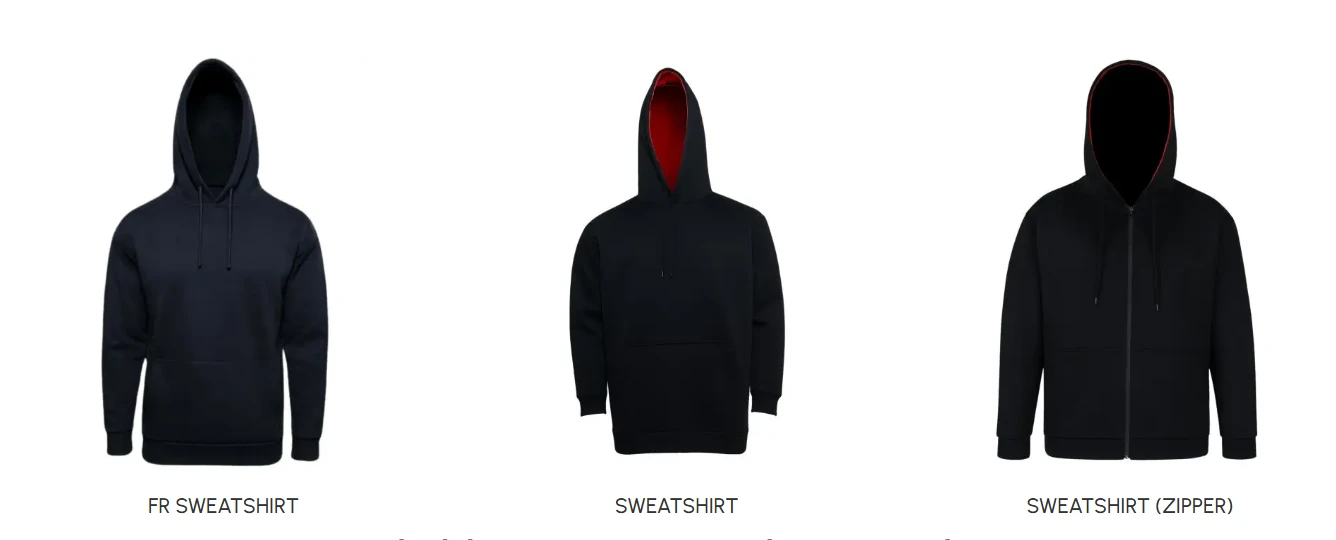
Even heavier hooded sweatshirts or a Sweatshirt (ZIPPER) style don’t solve these problems. Zippers can actually become a hazard if they heat up or fail under stress.
What Are Welding Hoodies, Exactly?
Welding hoodies are work hooded garments designed specifically for hot work environments. They resemble casual hoodies, but the similarities mostly stop at appearance.
Key Differences From a Regular Sweatshirt
A true welding hoodie typically includes:
- Flame-resistant (FR) fabric blends
- Reinforced seams and stress points
- Better coverage at the neck and wrists
- Fabric that resists ignition and self-extinguishes
This is where FR hoodies and FR Sweatshirt designs differ from everyday clothing. The goal isn’t to make you fireproof it’s to reduce burn severity and give you time to react if something goes wrong.
Understanding Flame Resistance vs Fire Proof
One of the most common misconceptions is that FR clothing prevents burns entirely. It doesn’t.
What FR Clothing Actually Does
Based on industry standards and real-world use:
- FR fabrics resist ignition
- If they do ignite, they self-extinguish
- They don’t melt or drip onto skin
- They reduce burn severity, not eliminate risk
This distinction matters. Welding hoodies are a layer of protection—not a replacement for safe practices.
How Welding Hoodies Outperform Standard Sweatshirts
- Heat and Spark Resistance
Welding hoodies are built to handle:
- Grinding sparks
- Welding spatter
- Short-term radiant heat exposure
A standard sweatshirt often shows damage after a single shift in these conditions.
- Durability in High-Wear Zones
Real-world feedback consistently points to:
- Reinforced shoulders for harness use
- Thicker cuffs that don’t fray
- Fabric that holds shape after repeated washes
This matters for anyone wearing the same outer layer day after day.
- Safer Design Choices
Details that make a difference:
- Covered seams instead of exposed stitching
- Fewer melt-prone components
- Hoods designed to fit under helmets
Even small design decisions can reduce snagging, heat transfer, or wear.
FR Hoodies vs FR Sweatshirts: Is There a Difference?
In practice, the terms are often used interchangeably, but there are subtle differences worth understanding.
FR Hoodie
- Includes a hood for neck and head coverage
- Better protection from overhead sparks
- Often preferred in fabrication and welding shops
- Pullover style without a hood
- Easier layering under jackets
- Less coverage for the neck and upper back
Neither is universally better—it depends on task, environment, and personal preference.
Zippered Sweatshirts: Convenience With Trade-Offs
A Sweatshirt (ZIPPER) design is popular for temperature control, but it comes with considerations.
Pros
- Easier to put on and remove
- Better airflow control
- Convenient for quick breaks
Cons in Welding Environments
- Zippers can heat up
- More failure points under stress
- Potential gap in flame resistance
Experienced welders often reserve zippered options for lighter-duty tasks rather than heavy arc welding.
Pairing Welding Hoodies With the Right Bottom Wear
Upper-body protection is only part of the equation.
Why Pants Matter Just as Much
Many injuries occur when sparks fall into laps or onto thighs. Pairing a welding hoodie with a fire resistant trouser for welding provides balanced protection.
From jobsite experience, mismatched gear FR top with non-FR pants is one of the most common safety gaps.
Comfort Matters More Than You Think
Protective gear only works if people actually wear it.
What Makes a Welding Hoodie Comfortable Enough for Daily Use
- Breathable FR fabric blends
- Proper sizing (not overly baggy)
- Soft inner feel without sacrificing protection
- Weight balance—not too heavy, not too thin
Overly stiff or bulky gear often ends up hanging in lockers instead of being used.
Common Mistakes Workers Make When Choosing Welding Hoodies
- Assuming All Hoodies Are FR
Many hoodies marketed as “workwear” offer zero flame resistance.
- Prioritizing Looks Over Function
Style fades fast when a garment fails under heat.
- Ignoring Certification and Fabric Details
If specifications aren’t clear, protection probably isn’t either.
- Mixing FR and Non-FR Layers Incorrectly
A non-FR outer layer can negate the benefit of an FR hoodie underneath.
Practical Buying Considerations From the Field
Before relying on a welding hoodie, consider:
- Task exposure: MIG, TIG, stick, grinding—all produce different hazards
- Work environment: Shop vs field vs confined space
- Climate: Heavier isn’t always better in hot shops
- Maintenance: FR properties must survive washing
Experienced suppliers like Unique Enterprises tend to emphasize these practical realities because they see how gear performs long after purchase.
How Welding Hoodies Fit Into a Complete Safety System
No single garment solves safety challenges. Welding hoodies work best as part of a broader approach to personal protective equipment.
For a broader look at compliant, real-world gear planning, this guide on Safety Gear offers helpful context on how clothing, gloves, and head protection work together.
Real-World Use Cases
Fabrication Shops
Welding hoodies are commonly worn as daily outer layers where sparks are frequent but not constant.
Field Welding
They’re often layered under jackets for flexibility as conditions change.
Maintenance and Repair Crews
Ideal for tasks that shift between grinding, welding, and general work.
What Workers Say From the Jobsite
I used to burn through regular sweatshirts every few weeks. Switching to a welding hoodie stopped that.
— Shop welder, Midwest
The biggest difference is confidence. I’m not worried every time a spark hits my sleeve.
— Field fabricator
Comfort matters. If it’s too stiff, guys won’t wear it—this actually gets used.
— Maintenance supervisor
FAQ:
Are welding hoodies required by safety regulations?
They’re not always required, but they’re strongly recommended for hot work environments.
Can I wear a welding hoodie all day?
Yes, if it’s designed for comfort and breathability.
Do FR hoodies lose protection after washing?
Quality FR garments are designed to retain protection when washed properly.
Is a hoodie enough protection for welding?
It’s one layer of protection and should be paired with other PPE.
Are zippered hoodies safe for welding?
They can be, but solid-front designs reduce potential weak points.
Final Thoughts: Why Welding Hoodies Are Worth Understanding
Welding hoodies outperform standard work sweatshirts because they’re built for the realities of heat, sparks, and wear not just comfort. They bridge the gap between safety and usability, making it easier for workers to protect themselves without feeling restricted.
When chosen thoughtfully and used correctly, they reduce risk, last longer, and support safer work habits. That’s why experienced teams and suppliers like Unique Enterprises focus less on trends and more on how gear actually performs in the field.
About the Author
Uniqent Editorial Team
The Unique Enterprises editorial team draws on hands-on experience with industrial safety gear, protective clothing, and jobsite compliance. Their insights are shaped by real conversations with welders, supervisors, and safety managers focused on practical protection that works where it matters most.