

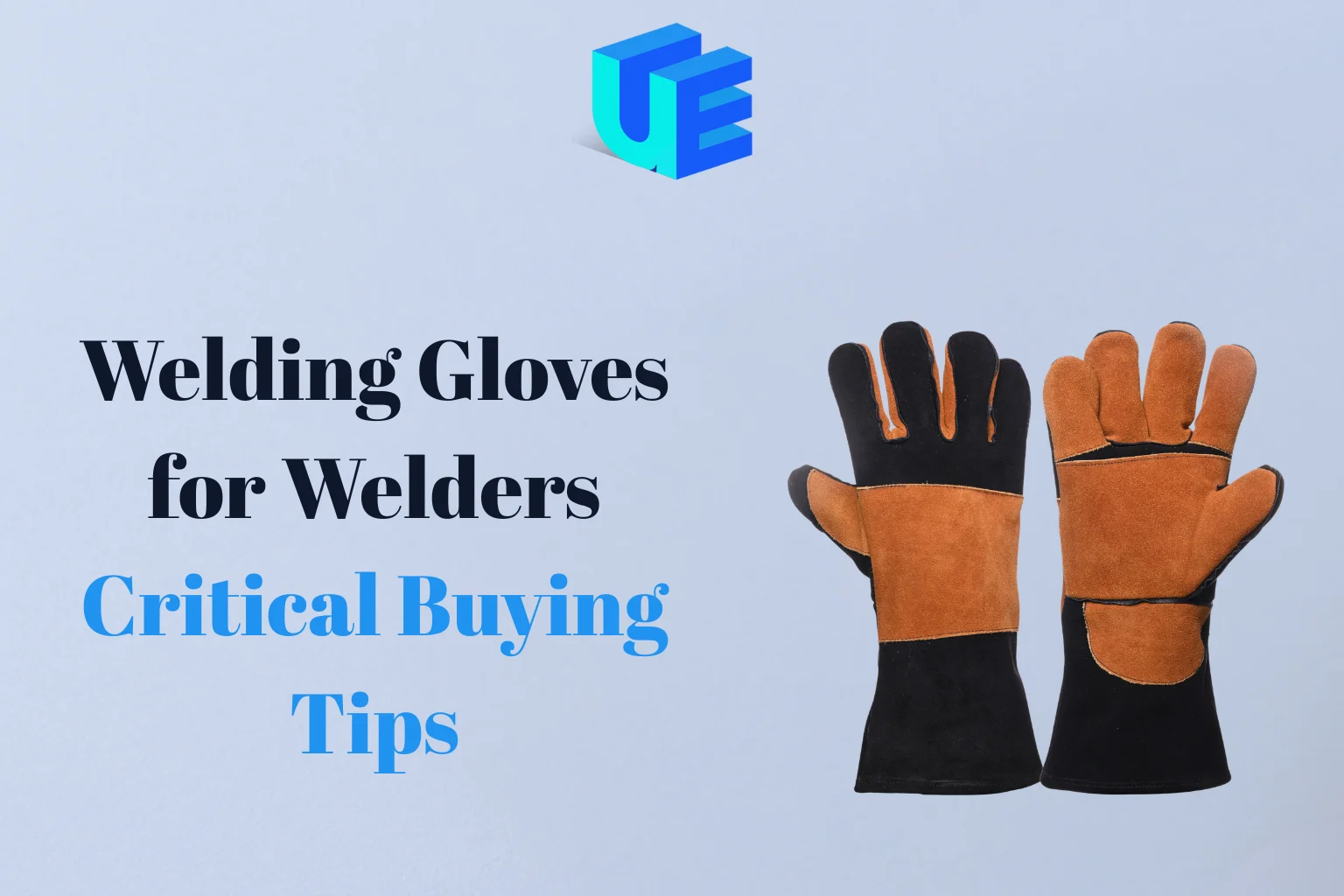
Choosing the right welding gloves for welders is not just about comfort it’s about preventing serious injuries, improving control, and maintaining productivity on the job. Whether you’re running MIG in a fabrication shop, stick welding on a construction site, or working around high-heat industrial equipment, your gloves are your first line of defense.
In my experience working with contractors, fabricators, and industrial buyers, hand injuries are one of the most common and preventable worksite issues. Burns, spatter penetration, crushed fingers, and loss of dexterity often trace back to using the wrong glove type for the task.
This guide breaks down what actually matters when selecting welding gloves, what most buyers overlook, and how to make a practical, informed decision that protects both safety and performance.
Why the Right Welding Gloves Matter More Than You Think
Welding environments expose hands to:
- Extreme heat
- Molten metal spatter
- Sparks
- Sharp edges
- Abrasive materials
- Crushing hazards
The wrong glove can:
- Transfer heat too quickly
- Stiffen after exposure
- Crack or split at seams
- Reduce grip control
- Cause hand fatigue
The right glove improves:
- Heat resistance
- Dexterity
- Grip strength
- Long-term durability
- Job efficiency
At Unique Enterprises, we regularly advise industrial buyers that glove selection should match the welding process—not just the budget.
Understanding the Types of Welding Gloves
Different welding methods demand different glove characteristics. There is no universal glove that performs best in every scenario.
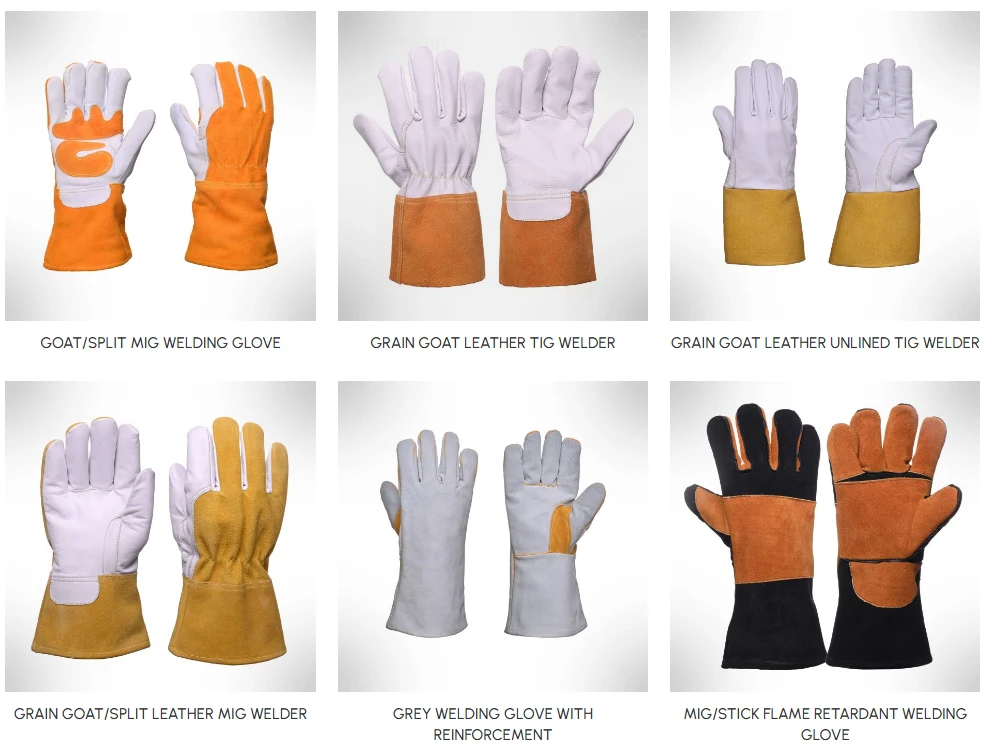
1. MIG Welding Gloves
MIG welding requires:
- Moderate heat protection
- Strong durability
- Good finger mobility
These gloves are typically:
- Medium thickness
- Reinforced in high-wear areas
- Designed for repetitive handling
Most professionals prefer leather work gloves made from cowhide or goatskin for MIG work because they balance protection and flexibility.
2. TIG Welding Gloves
TIG welding requires precision.
You need:
- Maximum dexterity
- Thin but heat-resistant material
- Strong fingertip sensitivity
Thicker gloves reduce torch control and filler rod precision.
In TIG applications, using heavy gloves can lead to inconsistent bead quality. This is a common mistake I see among new welders.
3. Stick Welding Gloves
Stick welding produces:
- Higher heat levels
- More spatter
- Slag exposure
Here, thicker gloves with extended cuffs are essential.
Durability and insulation matter more than fingertip sensitivity.
4. Hot Work & Industrial Applications
In steel plants or heavy fabrication environments, welders sometimes require hot mill gloves, designed for handling extremely hot materials for short periods.
These are not precision gloves — they are built for heat handling and bulk protection.
Key Materials: What Actually Performs Well
The material of the glove affects protection, durability, and comfort.
Leather
Leather remains the gold standard.
Common options include:
- Cowhide (durable and affordable)
- Goatskin (more flexible)
- Split leather (extra heat resistance)
High-quality leather work gloves last longer and resist abrasion better than synthetic alternatives.
However, not all leather is equal. Low-grade leather stiffens and cracks quickly under heat exposure.
Cotton Linings
Some gloves incorporate inner linings or cotton gloves as comfort layers.
Benefits:
- Sweat absorption
- Improved comfort
- Reduced skin irritation
However, cotton alone does NOT provide sufficient heat protection for welding. It should only be used as an inner layer or for light-duty tasks.
Kevlar Stitching
One overlooked feature is stitching material.
Kevlar thread:
- Resists burning
- Extends glove lifespan
- Prevents seam failure
Standard stitching often burns before the leather fails.
Heat Resistance vs Dexterity: Finding the Right Balance
One of the biggest buying mistakes is choosing the thickest glove available.
Thicker gloves:
- Reduce dexterity
- Increase hand fatigue
- Slow down detailed work
Thin gloves:
- Improve control
- Offer less insulation
The right balance depends on your welding type and exposure time.
Practical rule:
If you struggle to pick up a filler rod smoothly, your gloves may be too bulky for the task.
Cuff Length & Wrist Protection
Welders often underestimate cuff length.
Longer cuffs:
- Protect wrists from sparks
- Shield forearms from spatter
- Prevent slag burns
Short-cuff gloves may work for light MIG, but stick welding demands extended protection.
Fit Matters More Than Brand
An ill-fitting glove is dangerous.
Too tight:
- Restricts blood flow
- Causes fatigue
- Tears at stress points
Too loose:
- Reduces grip strength
- Increases snag risk
- Compromises control
Always check:
- Finger length
- Palm snugness
- Wrist security
Professional shops often order sample sizes before bulk purchasing.
Common Buying Mistakes
After years of advising industrial clients, these are the most common issues:
- Buying One Glove for All Applications
- Ignoring Heat Exposure Time
- Overlooking Stitch Quality
- Choosing Based on Price Alone
Real-World Use Cases
Fabrication Shop Example
A mid-sized metal fabrication unit was experiencing frequent glove replacements.
Problem:
- Low-cost gloves splitting at seams
- Poor heat resistance
Solution:
- Switched to thicker leather gloves with reinforced palms and Kevlar stitching
Result:
- 40% reduction in glove replacement frequency
- Improved welder satisfaction
Heavy Industrial Site
Workers handling hot materials used standard leather gloves.
Issue:
- Heat transfer through palm
- Occasional minor burns
Solution:
- Introduced hot mill gloves for high-temperature handling tasks
Result:
- Improved safety compliance
- Fewer minor injuries
When to Replace Welding Gloves
Do not wait for total failure.
Replace gloves when:
- Leather becomes brittle
- Seams begin separating
- Heat transfer increases
- Holes appear in fingertips
Routine inspection should be part of every safety checklist.
For broader workplace protection planning, it’s helpful to understand how gloves fit into overall PPE strategy. This guide on Safety Gear provides practical insights on building a compliant, effective protection system.
Storage & Maintenance Tips
Proper care extends glove life.
- Keep gloves dry
- Avoid compressing under heavy tools
- Do not leave in direct sunlight
- Clean off slag and debris regularly
Wet gloves lose insulation performance and degrade faster.
How to Choose the Right Supplier
When selecting a supplier:
Look for:
- Consistent material quality
- Clear product specifications
- Transparent stitching details
- Industrial-grade standards
At Unique Enterprises, the focus is on providing practical safety solutions rather than just catalog listings. Buyers benefit from understanding the intended application before selecting gear.
People Also Asked
What type of gloves are best for welding?
It depends on the welding type. TIG requires thin, flexible gloves. Stick welding needs thicker, heat-resistant options.
Can cotton gloves be used for welding?
No. Cotton gloves alone do not provide adequate heat or spark protection.
How long should welding gloves last?
With regular use, high-quality gloves may last several weeks to months depending on intensity.
Are thicker gloves always safer?
Not necessarily. Too thick can reduce control and increase fatigue.
What are hot mill gloves used for?
They’re used for handling extremely hot materials in industrial environments.
What Welders Say
Switching to better-quality leather gloves improved my control immediately. I didn’t realize how much the old ones were holding me back.
– Ramesh K., Fabricator
We used to buy cheaper gloves in bulk. After calculating replacement costs, we realized durability matters more.
– Industrial Supervisor
Hot mill gloves made a huge difference when handling heated components. No more minor burns.
– Plant Technician
Final Thoughts
Welding gloves are not just another safety accessory. They are essential tools that directly affect performance, protection, and productivity.
Choosing the right pair requires understanding:
- Welding type
- Heat exposure
- Material durability
- Fit and comfort
- Worksite hazards
A thoughtful, informed purchase prevents injuries, reduces replacement costs, and improves daily efficiency.
Whether you’re an individual welder or managing industrial procurement, investing time in selecting the right gloves pays off in safety and long-term value.
About the Author
This article was prepared by the safety equipment advisory team at Unique Enterprises. With hands-on experience supporting fabrication shops, construction teams, and industrial facilities, the team focuses on practical, field-tested safety solutions that meet real-world demands—not just catalog specifications.