

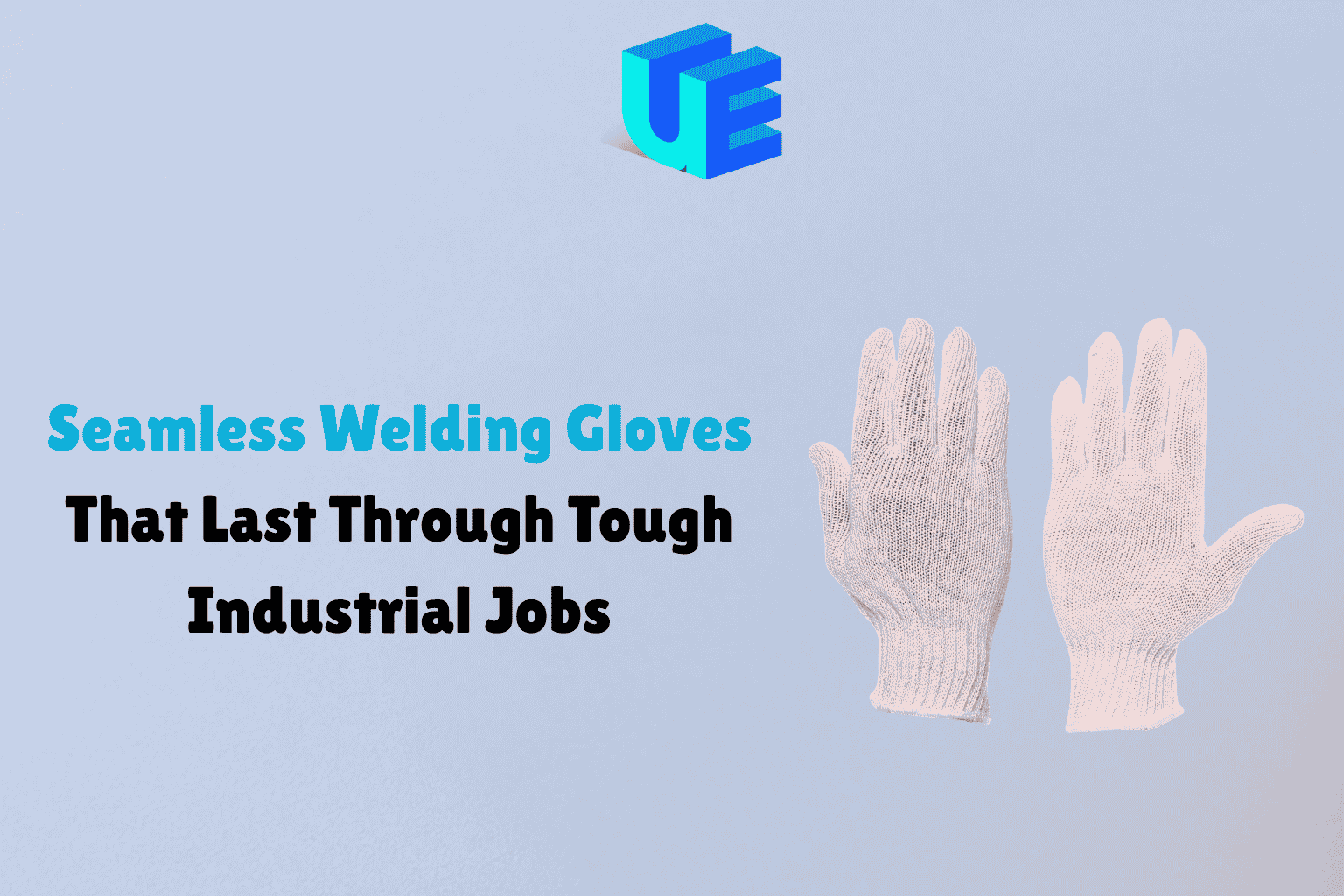
If you’ve ever pulled off a glove mid-shift because the seam was digging into your fingers, you already understand the problem. Hand protection is non-negotiable in welding and industrial environments but the wrong glove can make a long shift feel much longer. That’s where seamless gloves come in.
This guide covers everything you need to know about seamless welding gloves: how they’re made, why they hold up better in demanding conditions, what to look for when buying, and the mistakes most people make when choosing hand protection for industrial work.
Whether you’re outfitting a full crew or replacing your own worn-out pair, this is worth reading before you buy.
What Makes a Glove Seamless and Why It Matters
A seamless glove is knitted as a single continuous piece rather than assembled from cut panels stitched together. Traditional gloves have seams at the fingertips, palm joins, and cuffs and every seam is a potential pressure point, friction spot, or failure point.
Seamless construction eliminates those seam lines entirely. The result is a glove that sits flush against the skin, distributes grip pressure evenly, and doesn’t develop hot spots or abrasion points over a long shift.
For welders specifically, this matters for three reasons:
- Seams trap heat and debris seamless knitting reduces that risk
- Seam irritation leads to early glove removal, which creates safety gaps
- Seamless construction typically means more consistent fit and longer wear life
How Seamless Gloves Are Made
The Role of Seamless Gloves Knitting Machines
Modern seamless gloves are produced on specialized circular knitting machines — sometimes called seamless gloves knitting machines that knit the entire glove in one continuous motion. These machines can control fiber density, finger length, and coating thickness with high precision.
The technology allows manufacturers to engineer gloves for specific industrial demands: tighter knit for cut resistance, wider gauge for breathability, or reinforced palm zones without adding bulk at seam points.
This level of consistency is difficult to achieve with cut-and-sew construction, which is why seamless knitting has become the standard for high-performance industrial hand protection.
Seamless Cotton Gloves in Welding Environments
Not every welding environment requires full leather or heavy-duty protection. For light fabrication, parts handling, and finishing work, seamless cotton gloves are a practical and comfortable option.
Cotton is naturally breathable, which reduces hand fatigue over long shifts. Seamless cotton construction is also gentler on skin important for welders who develop sensitivities from extended glove use.
That said, cotton has limitations in high-heat environments. For direct arc welding or heavy slag exposure, cotton-based gloves need to be paired with appropriate secondary protection or replaced with coated or leather alternatives.
For specialized compression-style applications, seamless compression gloves offer added support and reduced hand fatigue particularly useful in repetitive-motion welding tasks.
Why Coated Seamless Knit Gloves Are the Industry Standard
The best coated seamless knit gloves combine the comfort of seamless construction with a durable coating typically nitrile, latex, or polyurethane applied to the palm and fingers.
This combination solves a real problem: bare knit gloves provide dexterity and breathability, but poor grip and limited abrasion resistance. Adding a coating gives you the best of both control and durability without sacrificing comfort.
Common Coating Types and Their Industrial Applications
- Nitrile coating oil-resistant, good grip on wet or oily surfaces, common in general industrial work
- Foam nitrile added cushioning, better for prolonged gripping tasks
- Latex coating flexible, strong grip, not ideal for latex-sensitive workers
- Polyurethane (PU) thin and precise, better for fine assembly than heavy industrial use
For general industrial welding work, the Machine Knit Dotted Palm Glove offers a textured grip surface without heavy coating useful when workers need tactile sensitivity alongside basic protection.
How to Choose the Best Seamless Gloves for Industrial Welding
Not all seamless gloves are built for the same job. Here’s what actually matters when you’re evaluating options for a welding environment:
1. Match the Glove to the Hazard Level
Light-duty fabrication and parts handling have different requirements than MIG or TIG welding. Identify the primary hazards heat, abrasion, cut risk, chemical exposure — before comparing gloves.
2. Check the Gauge
Knit gauge refers to the number of stitches per inch. Higher gauge = finer knit = better dexterity, but less bulk protection. Lower gauge = thicker fabric = more abrasion resistance. Most industrial welding applications use 10 to 13 gauge.
3. Evaluate the Coating Coverage
Full-dip coatings cover the entire hand. Palm-dip coatings cover only the working surface. Three-quarter dip is a middle option. For welding, palm-dip or three-quarter is usually sufficient and allows better breathability at the back of the hand.
4. Consider Cut Resistance
If the job involves handling sheet metal or components with sharp edges, look for gloves rated to ANSI/ISEA cut levels. The Machine Knit Cut Resistant Glove is a good option when cut hazards are part of the daily work environment alongside welding tasks.
5. Fit and Sizing
A poor fit is one of the most common reasons workers remove gloves early. Seamless construction improves fit consistency, but sizing still matters. Gloves that are too large bunch up at the fingers; too small and they restrict circulation over long shifts.
Honest Limitations: What Seamless Gloves Can’t Do
Seamless construction improves comfort and durability, but it’s not a universal solution. Here’s where these gloves have real limits:
- Not rated for direct arc exposure without additional protection in high-heat welding
- Knit gloves even coated can be compromised by sharp puncture risks if not specifically cut-rated
- Cotton-based seamless gloves degrade faster in oily or chemical environments than synthetic alternatives
- Not a substitute for welding gauntlets in stick or heavy MIG welding where sparks and spatter are significant
Understanding these limits helps you use seamless gloves where they genuinely perform — and pair them correctly with other PPE when the job demands it.
Common Mistakes When Buying Industrial Welding Gloves
These come up repeatedly when industrial buyers or safety managers are selecting hand protection:
Buying on Price Alone
The cheapest gloves almost always cost more in the long run through faster replacement cycles, reduced worker productivity, or compliance issues. A glove that lasts three times longer at 1.5x the price is the better economic decision.
Ignoring Fit Variation Across Workers
One size does not fit most. Ordering a single size for a full crew almost guarantees poor fit for a significant percentage of workers. Size your glove orders to actual hand measurements.
Choosing the Wrong Coating for the Environment
A latex-coated glove in a chemical environment, or a PU-coated glove in a high-abrasion job, will fail early and unexpectedly. Match the coating chemistry to the specific exposure in your facility.
Overlooking Dexterity Requirements
Thicker protection often means less hand sensitivity. For precision welding tasks — especially TIG — dexterity matters significantly. Don’t sacrifice control for protection you don’t actually need.
Not Replacing Gloves on Schedule
Worn gloves are a compliance and safety risk. Set replacement schedules based on actual usage patterns rather than waiting until gloves visibly fail.
Expert Tips for Getting More from Your Seamless Gloves
- Rotate between two pairs per worker alternating lets gloves dry fully between shifts, extending usable life significantly
- Store coated gloves away from UV light and heat both degrade rubber-based coatings faster than actual use
- Wash cotton seamless gloves regularly dirt and oil trapped in the knit accelerates fiber breakdown
- Do a fit check at the start of each shift a glove that shifts on the hand during work is a liability
- Track glove consumption by work area departments with higher replacement rates often signal a hazard or process issue worth investigating
Real-World Applications: Where Seamless Gloves Perform Best
Fabrication and Parts Handling
Workers who handle raw materials, move components, or operate machinery benefit from coated seamless knit gloves enough protection to prevent abrasion and oil contamination, light enough to maintain grip and control.
Finishing and Grinding Operations
Post-weld finishing involves significant abrasion exposure. A coated seamless glove with a heavier gauge fabric handles grinding and deburring tasks well without the bulk of full leather welding gloves.
Quality Inspection and Assembly
For workers doing inspection, assembly, or component fitting adjacent to welding operations, lightweight seamless gloves with PU or foam nitrile coatings allow the precision needed for detailed work.
For environments that combine grip, cut resistance, and seamless comfort, the 6872 is worth evaluating as a versatile option for multi-hazard industrial settings.
FAQ:
Are seamless gloves better for welding than regular knit gloves?
Yes, in most cases. Seamless gloves eliminate pressure points from seams, which reduces hand fatigue during long shifts and prevents the irritation that leads workers to remove gloves prematurely. For industrial welding, seamless construction also improves consistency across the glove’s service life.
What are coated seamless knit gloves used for?
Coated seamless knit gloves are used across fabrication, assembly, parts handling, grinding, and general industrial work. The knit base provides breathability and comfort; the coating adds grip, abrasion resistance, and depending on coating type oil or chemical resistance.
How long do seamless gloves last in industrial environments?
It depends on the intensity of use and work environment. In general fabrication, a good-quality coated seamless glove lasts between two and eight weeks per worker with daily use. Heavier applications accelerate wear. Proper storage and rotation extends usable life.
Can seamless cotton gloves be used for welding?
Seamless cotton gloves are suitable for light fabrication, parts handling, and finishing tasks where heat exposure is limited. They’re not appropriate for direct arc welding or environments with significant spatter or slag. Always match glove material to the specific hazard level of the job.
What glove gauge should I use for welding work?
For most industrial welding and fabrication tasks, 10 to 13 gauge is the standard range. Higher gauge (like 15 or 18) offers more dexterity for precision work. Lower gauge provides heavier fabric for abrasion-heavy environments. Match gauge to the balance of protection and dexterity your work requires.
What Industrial Workers Say
We switched our entire fabrication floor to seamless coated knit gloves two years ago. Glove-related complaints dropped significantly, and we’ve seen better compliance during inspections. Workers just keep them on longer because they’re actually comfortable.
— Facilities Manager, Metal Fabrication Plant
I’ve tried a lot of welding gloves over the years. The biggest difference with seamless is at the fingertips — no bunching, no pressure lines after a long shift. For grinding and finishing work especially, I won’t go back to seamed gloves.
— Senior Welder, Structural Steel Contractor
Ordering the right sizes made a bigger difference than I expected. Once we sized the team properly and went seamless, our replacement rate dropped by about a third. The upfront cost difference paid for itself quickly.
— Safety Coordinator, Industrial Manufacturing Facility
Final Thoughts
Seamless welding gloves aren’t just a comfort upgrade they’re a practical improvement in safety compliance, worker performance, and long-term cost management. The key is understanding that not every seamless glove is built for every application.
Match your glove to the specific hazards in your environment, get the sizing right, and set proper replacement schedules. Those three factors determine more about glove performance than any product specification.
For industrial-grade seamless gloves built for demanding welding and fabrication environments, explore Unique Enterprises’ full range at Unique Enterprises.
About the Author
This article was written by the editorial team at Unique Enterprises — a manufacturer and supplier of industrial hand protection and safety gloves with hands-on experience serving welding, fabrication, and manufacturing sectors. Our content is based on real product knowledge, direct industry experience, and the practical questions workers and safety managers ask every day.