

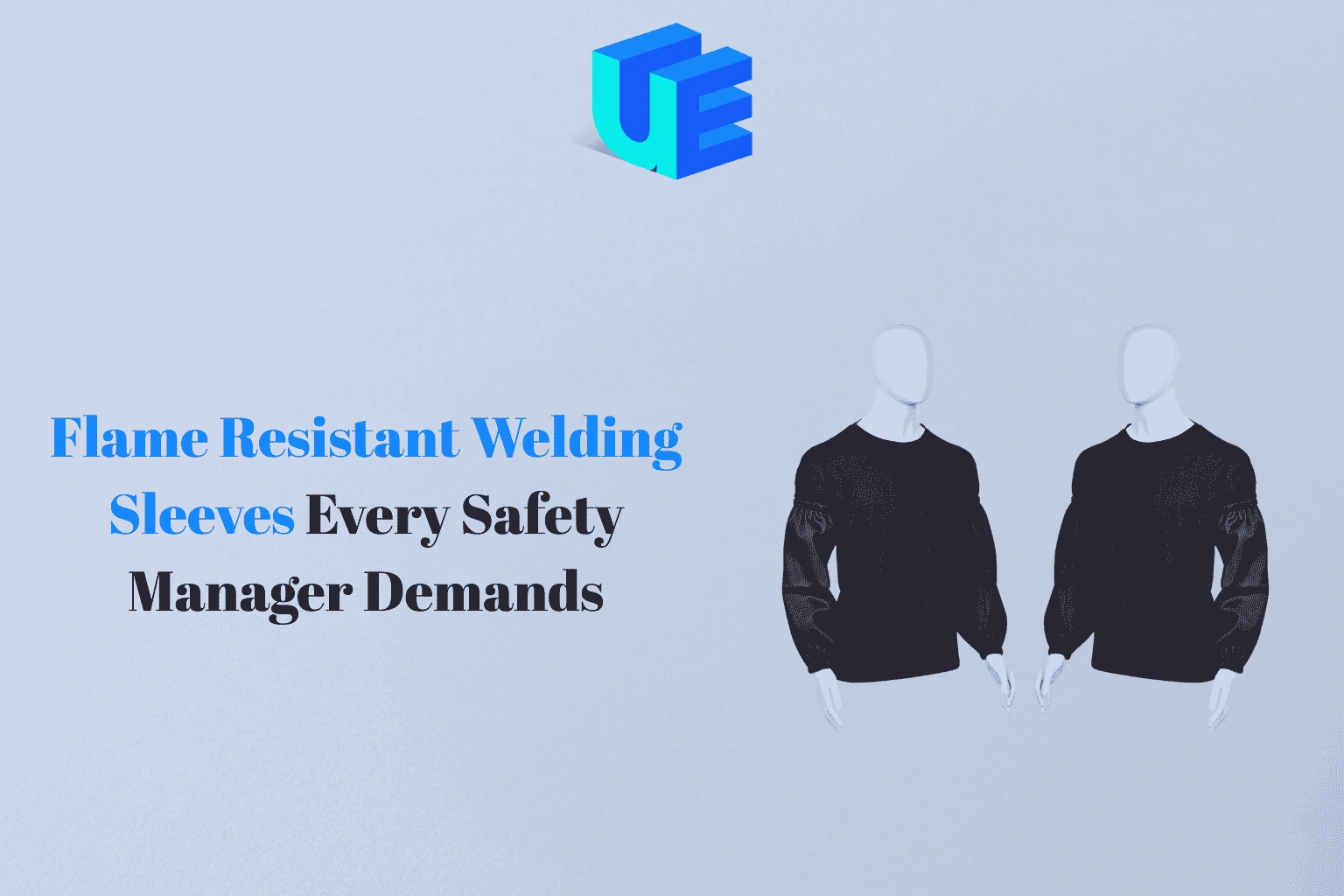
On a welding floor, risk is never theoretical. Sparks, spatter, radiant heat, and the occasional flash fire are part of the daily reality. Over the years, one lesson becomes clear to every experienced safety manager: arm protection is one of the most overlooked and most injured areas on the job. That’s why flame resistant welding sleeves are no longer viewed as optional accessories. They’re demanded as part of a practical, task-based safety system.
This article is written for safety managers, supervisors, and welders who want clarity not marketing noise. We’ll break down what flame resistant sleeves actually do, where they work best, where they fall short, and why seasoned safety teams insist on them in modern welding operations.
Why Safety Managers Focus on Arm Protection First
When incidents are reviewed, arm injuries show up again and again. Not because workers ignore PPE but because arm protection is often inconsistent.
Common scenarios include:
- Welders wearing gloves but short sleeves
- Jackets removed due to heat stress
- Sleeves riding up during overhead work
- Non-FR fabrics worn under protective layers
Safety managers don’t demand gear to check a box. They demand it because arms are closest to the hazard.
What Are Flame Resistant Welding Sleeves?
Flame resistant welding sleeves are protective sleeves made from materials engineered to:
- Self-extinguish when exposed to flame
- Resist melting and dripping
- Reduce burn severity during short-duration heat exposure
They are typically worn from wrist to upper arm and secured with elastic or snaps to stay in place during movement.
It’s important to clarify what they are—and what they aren’t.
What They Do Well
- Protect against sparks, spatter, and radiant heat
- Reduce injury risk during flash fire events
- Provide flexibility compared to full jackets
What They Don’t Do
- Replace full torso protection
- Withstand sustained open flame
- Compensate for poor work practices
Understanding these boundaries is central to how safety managers deploy them effectively.
Why Safety Managers Demand Sleeves Instead of “Optional PPE”
In theory, welders can choose what feels comfortable. In practice, inconsistent PPE leads to inconsistent safety outcomes.
Safety managers insist on sleeves because they:
- Standardize protection across crews
- Reduce judgment calls in the field
- Improve compliance during audits
- Lower incident rates tied to minor burns
When sleeves are part of the required kit, fewer shortcuts happen.
FR Welding Sleeves vs. Full Jackets: A Practical Comparison
One of the most common questions from crews is why sleeves are required when jackets are already available.
When Sleeves Are the Better Choice
From real job-site experience, sleeves work best when:
- Heat stress is a concern
- Tasks are short or intermittent
- Workers need frequent arm movement
- Full jackets discourage compliance
When Jackets Are Still Necessary
Safety managers still require jackets for:
- Extended welding sessions
- High-spatter processes
- Cold environments
- High-risk confined spaces
The most effective programs allow both, based on task-level risk assessments.
Sleeve Length and Coverage: Why 18 Inches Is the Standard
Not all sleeves provide the same coverage.
Experienced safety teams consistently choose 18-inch sleeves because they:
- Cover the forearm and upper arm
- Reduce gaps between gloves and shirts
- Stay in place during overhead work
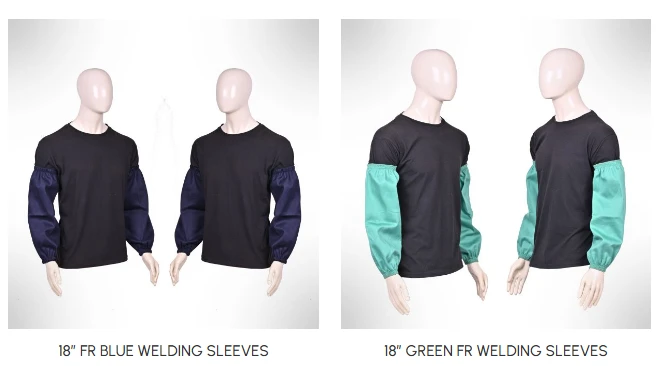
That’s why you’ll often see 18″ FR Blue Welding Sleeves or 18″ Green FR Welding Sleeves specified in safety plans.
Shorter sleeves may look fine on paper—but in practice, they expose skin when workers move.
Color Choices Aren’t Just Aesthetic
While color doesn’t change protection levels, it plays a role in safety management.
Safety managers often use different colors to:
- Identify compliant PPE at a glance
- Spot damage, contamination, or wear
- Assign gear by department or task
This is why blue and green sleeves are common in organized welding environments—they make inspections easier.
Materials That Perform in Real Welding Conditions
From hands-on experience, not all flame resistant fabrics behave the same once sparks start flying.
What Safety Managers Look For
- Proven FR-treated cotton or blends
- Durable stitching that doesn’t unravel
- Fabric that doesn’t stiffen excessively after washing
- Elastic that holds shape over time
Low-quality sleeves often fail not in testing—but after repeated laundering and daily abuse.
Benefits of Flame Resistant Welding Sleeves
When properly selected and maintained, sleeves provide clear advantages.
Practical Benefits
- Targeted protection without full-body bulk
- Improved airflow in hot environments
- Faster donning and doffing
- Better compliance during peak heat
From a safety perspective, gear that workers actually wear is more effective than gear that stays in lockers.
Limitations Safety Managers Acknowledge
Good safety programs are honest about limitations.
Sleeves:
- Do not protect the torso
- Are not designed for long flame exposure
- Require proper layering underneath
- Must be inspected and replaced regularly
Ignoring these limits leads to misuse and false confidence—two things safety managers work hard to avoid.
How Sleeves Fit into a PPE System
No safety manager treats sleeves as standalone protection.
They’re most effective when combined with:
- FR shirts or base layers
- Welding gloves with proper overlap
- Face and eye protection
- Task-appropriate ventilation
This layered approach reflects how modern safety programs are structured—based on exposure, not convenience.
For a broader look at how PPE standards are evolving, this guide on Safety Gear explains why many programs are shifting toward task-based PPE selection.
Common Mistakes Safety Managers See on the Floor
Even experienced crews make mistakes. The difference is whether they’re corrected early.
Mistake #1: Non-FR Base Layers
Wearing flame resistant welding sleeves over synthetic shirts can:
- Trap heat
- Cause underlying fabric to melt
- Increase burn severity
Mistake #2: Poor Fit
Loose sleeves allow sparks inside. Tight sleeves restrict movement and get removed.
Mistake #3: Ignoring Wear
Burn holes, thinning fabric, or stretched elastic mean the sleeve is no longer reliable.
Maintenance: The Quiet Factor That Determines Effectiveness
Many sleeves fail not from use—but from poor care.
Best Practices Safety Managers Enforce
- Wash according to manufacturer instructions
- Avoid fabric softeners
- Inspect after laundering
- Remove from service when damaged
Well-maintained sleeves last longer and perform more consistently.
Real-World Use Cases from Safety Programs
Fabrication Shops
Sleeves are issued as standard PPE for tack welding and short runs where jackets are often skipped.
Field Welding Crews
In high-heat environments, sleeves improve compliance compared to heavy jackets.
Confined Space Work
Targeted arm protection reduces bulk while maintaining safety near the arc.
Across these environments, sleeves reduce minor burn incidents that otherwise add up over time.
Why Safety Managers Trust Specialized PPE Brands
General apparel brands often treat FR gear as an add-on. Safety-focused brands understand:
- Compliance requirements
- Consistency across batches
- Supply reliability
- Real-world welding abuse
Teams behind Uniqent Enterprises work closely with industrial users and safety managers, which shows in how their PPE is designed for actual job-site conditions—not showroom appeal.
This isn’t about branding. It’s about gear that performs predictably when it matters.
FR Welding Sleeves vs. Flame Resistant Welding Sleeves
You’ll often hear both terms used interchangeably—and in practice, they usually refer to the same category of PPE.
Safety managers focus less on wording and more on:
- Verified flame resistance
- Clear labeling
- Consistent performance
Whether labeled as fr welding sleeves or flame resistant sleeves, what matters is proven protection and correct use.
People Also Asked
Do flame resistant sleeves protect against flash fires?
Yes, they reduce injury during short-duration flash exposure when used correctly.
Can sleeves replace a welding jacket?
No, sleeves supplement protection and are chosen based on task-level risk.
How often should FR welding sleeves be replaced?
Replace sleeves when fabric thins, burns through, or elastic fails to ensure safety.
Should sleeves overlap gloves?
Yes, proper overlap prevents exposed skin at the wrist.
Why do safety managers insist on flame resistant sleeves?
They standardize protection, reduce minor burns, improve compliance, and address one of the most exposed areas—the arms.
What Safety Professionals Are Saying
Sleeves reduced minor burn reports almost immediately.
— Safety Manager, Fabrication Facility
We saw better compliance once sleeves became standard issue.
— EHS Supervisor, Field Welding Crew
The key was matching protection to the task, not forcing jackets everywhere.
— Industrial Safety Consultant
Final Takeaway: Why Safety Managers Insist on Sleeves
Safety managers don’t demand PPE arbitrarily. They do it because patterns repeat—and injuries follow those patterns. Flame resistant welding sleeves address one of the most common exposure points in welding work while balancing comfort, compliance, and protection.
When chosen correctly, worn properly, and maintained consistently, sleeves become one of the simplest ways to reduce risk without slowing production.
In modern welding operations, that balance is exactly what safety managers demand.
About the Editorial Team
This article was written by the Uniqent Enterprises editorial team, drawing on hands-on experience with industrial PPE, welding environments, and workplace safety programs. Our focus is practical guidance shaped by real job-site conditions—not theory or marketing language.