

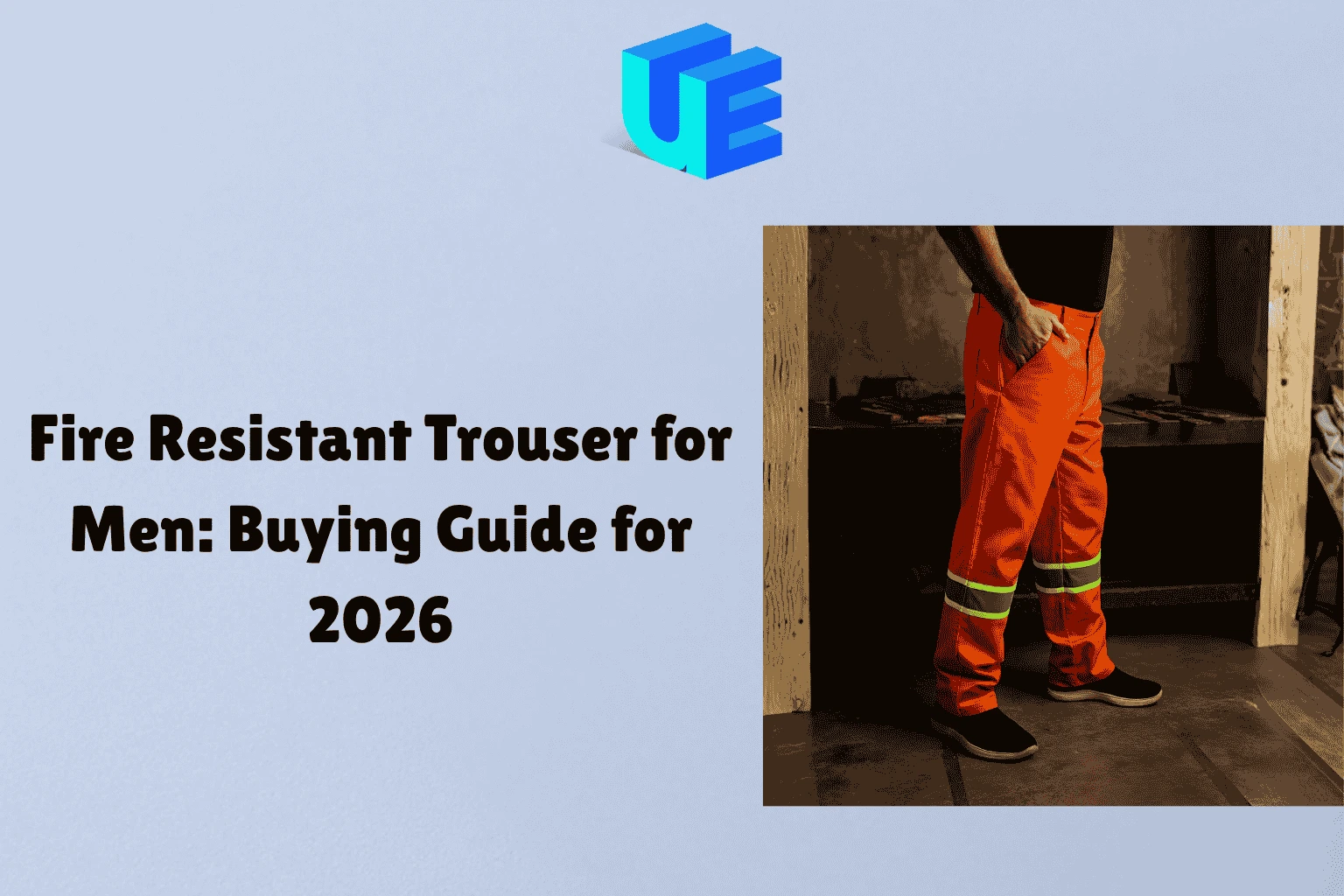
If you’re comparing a fire resistant trouser for men, the right choice is about much more than fabric weight or price. In real jobsite conditions especially around sparks, radiant heat, grinding, welding, and hot metal your trousers become part of your protection system. The wrong pair can wear out too fast, trap heat, restrict movement, or fail when the work gets demanding. The right pair should help you move comfortably, hold up under pressure, and support safer working habits over time.
This guide explains what fire-resistant trousers are, who actually needs them, how to compare them properly, and what buyers often get wrong. If you work in fabrication, welding, utilities, maintenance, heavy industry, or field service or you’re buying PPE for a team this article will help you make a smarter decision in 2026.
What Is a Fire-Resistant Trouser?
A fire-resistant trouser is workwear designed to reduce ignition risk and limit flame spread when exposed to sparks, flash fire hazards, or certain heat-related work conditions.
That does not mean it is fireproof. That’s an important distinction.
In simple terms:
Fire-resistant trousers are made to:
- Resist catching fire easily
- Self-extinguish once the ignition source is removed
- Reduce burn severity compared with ordinary clothing
- Provide a safer outer layer in certain work environments
For many trades, especially hot-work environments, FR trousers are not optional they’re part of responsible PPE planning.
Why the Right Trousers Matter on the Job
A lot of workers pay attention to helmets, gloves, and boots first. Trousers often get treated as “just work pants.” That’s a mistake.
On many sites, the lower body takes regular exposure from:
- Welding sparks
- Grinding debris
- Hot slag
- Heat from nearby work
- Sharp edges and abrasion
- Kneeling, climbing, and repetitive movement
If trousers fail too early, fit poorly, or aren’t appropriate for the task, they become a weak point in your workwear setup.
A good pair should help you:
- Move safely and freely
- Reduce irritation during long shifts
- Avoid frequent replacement
- Stay protected without overheating unnecessarily
- Work with the rest of your PPE
That last point matters more than people realize. Good trousers should work with your gloves, jacket, boots, and task demands not fight against them.
What You Need to Know Before Buying
Before comparing styles or colors, it helps to understand the basics that actually affect performance.
Fire Resistant vs Flame Retardant: What’s the Difference?
These terms often get mixed up.
Fire-resistant clothing
Usually refers to garments made from materials or construction methods designed to resist ignition and reduce flame spread as part of the fabric’s intended performance.
Flame-retardant clothing
Often refers to fabric that has been chemically treated to improve flame resistance.
In practical buying terms, both may serve a safety role—but the key is not the label alone. What matters is:
- The intended hazard level
- Fabric construction
- Comfort in real use
- Durability after repeated wear and washing
- Whether the garment suits the actual work environment
A label is not enough. You need the right garment for the actual task.
Who Should Wear Fire-Resistant Trousers?
Not every worker needs the same level of protection, but FR trousers are commonly used by:
- Welders
- Fabricators
- Metalworkers
- Electric utility crews
- Oil and gas workers
- Industrial maintenance teams
- Field mechanics
- Plant and refinery workers
- Construction crews doing hot work
If your work regularly involves sparks, heat, molten splash, or electrical hazard exposure, ordinary cotton or casual work pants are not a smart substitute.
Key Buying Factors: What Actually Matters
This is where many buyers either overspend on the wrong features or save money in the wrong places.
1) Fabric Type and Weight
The fabric determines a lot of the real-world experience: heat management, mobility, durability, and comfort.
Common things to compare:
- Cotton-based FR blends
- Heavier-duty industrial fabrics
- Reinforced panels in high-wear areas
- Breathability vs toughness trade-offs
Practical reality:
A heavier trouser is not automatically better.
For example:
- A shop welder working near frequent sparks may need tougher abrasion resistance
- A field technician in a hot climate may need lighter, more breathable protection
- A fabrication worker kneeling on rough surfaces may need reinforced stress zones
The best option depends on what the workday actually looks like.
2) Fit and Mobility
A lot of men buy work trousers too stiff, too slim, or too loose.
That creates problems fast.
Poor fit can lead to:
- Restricted movement
- Stress on seams
- Premature crotch or knee wear
- Catch points around machinery or site hazards
- General fatigue over long shifts
Look for:
- Room to bend and kneel
- A clean fit without excess fabric flapping
- Enough space for layering if required
- Waist and rise that stay comfortable during movement
In real jobsite use, comfort isn’t a luxury feature—it directly affects how consistently the garment gets worn properly.
3) Stitching and Reinforcement
This is one of the most overlooked areas.
A trouser may look solid on the hanger but fail early at the seams, pockets, or knees if construction quality is weak.
Check for:
- Strong seam construction
- Reinforced stress points
- Durable belt loops
- Secure pocket stitching
- Strong fly and closure systems
A pair of trousers that survives washing but fails after repeated kneeling or climbing is not really durable.
4) Pocket Design and Utility
This sounds minor until you wear the trousers every day.
Useful work trousers should support the tools and movement your job requires.
Helpful design features may include:
- Deep side pockets
- Secure rear pockets
- Tool-accessible placement
- Cargo storage where appropriate
- Pocket designs that don’t snag or collect hot debris too easily
For hot-work trades, overly open or poorly placed pockets can become a practical nuisance.
5) Task-Specific Suitability
A common buying mistake is choosing one trouser for “all industrial work.”
That rarely works well.
Different jobs place different demands on trousers:
- Welding: spark resistance, durability, comfort while crouching
- Field service: movement, lighter weight, weather adaptability
- Workshop fabrication: abrasion resistance, utility storage
- Electrical environments: hazard-specific garment planning
- Outdoor industrial work: mobility, layering compatibility, weather resistance
That’s why the best buying decisions are based on the actual task—not just product photos.
Are Welding Trousers the Same as Fire-Resistant Trousers?
Not always—but they often overlap.
Welding trousers are typically selected with spark exposure, hot debris, and rugged wear in mind. Many are also fire-resistant, but not every work trouser marketed for tough use is appropriate for welding conditions.
If you weld regularly, look for trousers that offer:
- Strong spark resistance
- Good lower-body coverage
- Comfortable kneeling and crouching fit
- Durable seams and fabric
- Practical compatibility with boots and jackets
For buyers comparing rugged workwear categories, it can also help to review purpose-built options such as leather welding trousers if your work environment involves heavier exposure and more demanding hot-work conditions.
Benefits and Limitations of Fire-Resistant Trousers
A useful buying guide should be honest about both.
Benefits
Better lower-body protection in hot-work settings
They provide a safer outer layer than standard work pants in many industrial environments.
More appropriate for demanding jobsite use
Compared with casual trousers, they’re generally better suited to sparks, abrasion, and repeated movement.
Improved long-term value when chosen correctly
A well-chosen pair often lasts longer and performs more consistently than cheaper alternatives that wear out quickly.
Better worker confidence and compliance
People are more likely to wear PPE properly when it fits, functions, and feels practical during a full shift.
Limitations
They can run warmer than ordinary workwear
Some FR garments feel hotter, especially in high-humidity or outdoor summer conditions.
Not all options are equally comfortable
A technically compliant trouser can still be frustrating to wear if the cut or fabric is poor.
Price can vary significantly
Cheaper options may save money upfront but cost more through poor durability or replacement frequency.
They are not a substitute for safe work practices
No garment replaces hazard awareness, correct PPE combinations, and proper procedures.
That point matters: good workwear reduces risk—it does not eliminate it.
How to Choose the Right Pair for Your Work
This is the part most buyers actually need.
For Welders and Fabricators
Prioritize:
- Spark resistance
- Tough construction
- Knee comfort
- Reinforced wear zones
- Reliable fit while crouching and bending
If you’re specifically comparing the best welding trousers, focus less on branding language and more on how the trousers perform after repeated use, wash cycles, and long hours on the floor.
For General Industrial Work
Prioritize:
- Breathability
- Daily comfort
- Pocket practicality
- Durability in movement-heavy roles
- Easy compatibility with jackets and gloves
For Outdoor and Field Work
Prioritize:
- Layering comfort
- Weather adaptability
- Mobility
- Fabric that doesn’t feel too heavy all day
- Practical storage without bulk
For Team or Bulk Buyers
If you’re buying for staff or crew, compare:
- Sizing consistency
- Durability across repeated use
- Ease of replacement
- Wash performance
- Whether workers will actually wear them correctly
One of the biggest hidden costs in PPE isn’t just replacement—it’s buying gear people dislike wearing.
Common Mistakes to Avoid
This is where many poor buying decisions happen.
1) Buying Based on Price Alone
Low-cost workwear often looks acceptable until it sees real use.
Common issues include:
- Early seam failure
- Stiff uncomfortable fabric
- Poor pocket function
- Weak durability at knees and seat
- Reduced long-term value
A cheap pair that lasts six weeks is not cheaper.
2) Ignoring the Type of Work
A trouser suited for light-duty industrial use may not hold up well in welding, grinding, or fabrication.
Always buy based on:
- Exposure level
- Movement needs
- Work environment
- Daily wear pattern
3) Choosing the Wrong Fit
Workers often size up too far “for comfort” or size down for a cleaner look.
Both can cause problems.
Better approach:
Choose a fit that allows:
- Squatting
- Climbing
- Kneeling
- Reaching
- Comfortable layering when needed
If possible, test fit in a working stance—not just standing upright.
4) Overlooking Wash and Care Requirements
This is a big one.
Some users unknowingly shorten garment life through poor laundering habits.
Common mistakes include:
- Using harsh bleach products
- Overheating in drying
- Ignoring care labels
- Washing with contaminated or abrasive items
A good garment can lose performance or wear out early if it isn’t maintained properly.
5) Treating Trousers as Standalone PPE
Your trousers are one part of a system.
They should work alongside:
- Jackets
- Gloves
- Boots
- Base layers
- Site-specific PPE
For example, if your hands are exposed to abrasion, heat, or sparks, your lower-body protection should be paired with equally practical hand protection. This is where a guide like best mens leather gloves becomes useful for building a more complete and realistic workwear setup.
Expert Tips and Best Practices
These are the practical details experienced workers usually learn the hard way.
Tip 1: Buy for Your Hardest Typical Day
Don’t buy based on your easiest tasks. Buy based on the toughest routine exposure you actually face.
Tip 2: Test Movement Before You Commit
A trouser that feels fine standing still can become frustrating after three hours of kneeling, climbing, or welding.
Tip 3: Check Wear Points Early
After the first few weeks, inspect:
- Knees
- Crotch seams
- Pocket corners
- Hem wear
- Belt loops
That tells you more about quality than marketing copy ever will.
Tip 4: Don’t Ignore Climate
A heavy-duty trouser may be excellent in one environment and miserable in another. Heat, humidity, and layering needs matter.
Tip 5: Keep More Than One Use Case in Mind
Some workers need one pair for shop work and another for lighter field tasks. One “do-it-all” option isn’t always the smartest long-term choice.
Real-World Use Cases
These examples make the buying decision easier to understand.
Example 1: Workshop Welder
A welder working indoors five to six days a week needs:
- Strong spark resistance
- Comfortable crouch mobility
- Durable knees and seams
- Good compatibility with boots and gloves
Best approach: Choose trousers built for frequent hot-work movement, not just general utility wear.
Example 2: Fabrication Crew Member
A worker moving between cutting, grinding, and assembly tasks needs:
- Toughness
- Practical pockets
- Reliable movement
- Good lower-body coverage
Best approach: Look for durable FR trousers that balance utility with comfort across varied tasks.
Example 3: Outdoor Industrial Technician
A field technician working in changing conditions needs:
- Comfort over long hours
- Moderate protection
- Layering flexibility
- Less bulky wear
Best approach: Choose a trouser that supports mobility and daily comfort without overbuilding for the wrong environment.
Helpful Product Comparisons to Explore
If you’re comparing styles and use cases, it can help to look at a few practical categories rather than trying to decide from one product page alone.
For example:
- Green FR Trouser may help buyers compare standard FR workwear options
- Orange FR Trouser may be useful if visibility, fabric feel, or use-case differences matter in your selection process
The goal isn’t to buy based on color or appearance—it’s to understand how different designs and constructions fit different types of work.
Quick Buying Checklist for 2026
If you want a fast decision framework, use this before you buy:
Choose trousers that match:
- Your actual job hazards
- Your movement needs
- Your climate and shift length
- Your preferred pocket setup
- Your comfort tolerance for heavier fabrics
- Your wash and maintenance routine
- Your broader PPE setup
If a pair fails two or three of those points, keep looking.
FAQ
1) What is the best fire resistant trouser for men?
The best one is the pair that matches your actual work conditions, fits well, and holds up under repeated use—not just the cheapest or heaviest option.
2) Are FR trousers necessary for welding?
In many welding environments, yes. Standard work pants are usually not a smart choice around sparks, hot debris, and repeated heat exposure.
3) How should fire-resistant trousers fit?
They should allow easy movement, kneeling, and bending without being overly baggy or tight.
4) Can FR trousers be worn every day?
Yes, many are designed for daily industrial use, as long as they suit the job and are cared for properly.
5) How long do FR trousers usually last?
That depends on work intensity, washing habits, and fabric quality. In tough environments, durability matters as much as initial comfort.
What Workers Commonly Say After Switching to Better Work Trousers
The biggest difference was comfort during long welding shifts. I stopped constantly adjusting my trousers while crouching.
The cheaper pairs looked fine at first, but the seams gave out too quickly. Spending a little more saved us repeat buying.
Once I started choosing workwear by task instead of price, I had fewer problems on the job.
These kinds of outcomes are common because the right workwear tends to improve both comfort and consistency not just appearance.
Final Thoughts
Choosing the right fire resistant trouser for men is really about matching protection, comfort, durability, and jobsite reality. The best pair is not always the thickest, the cheapest, or the one with the most features. It’s the one that suits the actual hazards, movement, and wear demands of your work.
If you weld, fabricate, maintain industrial equipment, or work around regular spark and heat exposure, your trousers should be treated like serious PPE—not an afterthought. A better buying decision now usually means fewer replacements, fewer frustrations, and a safer, more comfortable workday over time.
Buy for how you actually work, not how the product is marketed. That’s what tends to hold up in the real world.
About the Author
Unique Enterprises Editorial Team creates practical, field-aware content for workers, buyers, and businesses that need dependable industrial apparel and PPE guidance. Our editorial focus is simple: explain what matters, cut through vague product language, and help readers make better decisions based on real-world use.