

For professional welders, success on the jobsite isn’t just about skill—it’s also about having the right tools at your fingertips. Welding accessories may seem like secondary gear, but in reality, they are essential for safety, efficiency, and quality. From a leather welding rod holder to practical apparel and sweat management tools, the right accessories streamline workflow and protect you from hazards.
In this guide, we’ll cover must-have welding accessories, explain their real-world benefits, highlight common mistakes, and provide actionable tips so you can work smarter, safer, and faster.
Why Welding Accessories Matter
Welders often focus on machines and electrodes while overlooking accessories. That’s a mistake. Accessories can:
- Reduce wasted motion and downtime
- Improve electrode handling and accessibility
- Protect welders from sparks, heat, and debris
- Enhance comfort during long shifts
Even small items like a 100% natural color terry cloth sweat band can prevent distractions and maintain focus, while tools like a leather welding rod holder keep rods secure and organized. Together, these items contribute to overall productivity and safety.
Core Categories of Welding Accessories
Professional welding accessories fall into a few key categories:
- Rod and Electrode Management
Proper rod storage is essential for quality welding.
- Leather Welding Rod Holder: Durable, heat-resistant, and keeps rods accessible. Prevents contamination and reduces wasted trips for new rods.
- Organization matters: Heavy-duty leather pouches outperform cheap fabric options in industrial settings.
- Personal Comfort & Sweat Management
Long hours over the arc can be physically taxing. Items that manage sweat and comfort improve focus and reduce errors.
- 100% Natural Color Terry Cloth Sweat Band: Absorbs sweat, prevents dripping into eyes or helmet, and maintains hygiene.
- Comfortable gloves and aprons prevent fatigue and repetitive strain.
- Protective Apparel & Spark Guards
Safety is always priority one. Welding accessories complement your main PPE.
- Flame-resistant jackets and gloves
- Weld protection gaiters
- Spark guards integrated into rod holders or aprons
- Cotton welding accessories: lightweight and breathable protection for minor exposure areas
- Small Tools & Consumables
Even minor tools qualify as essential accessories when they improve workflow:
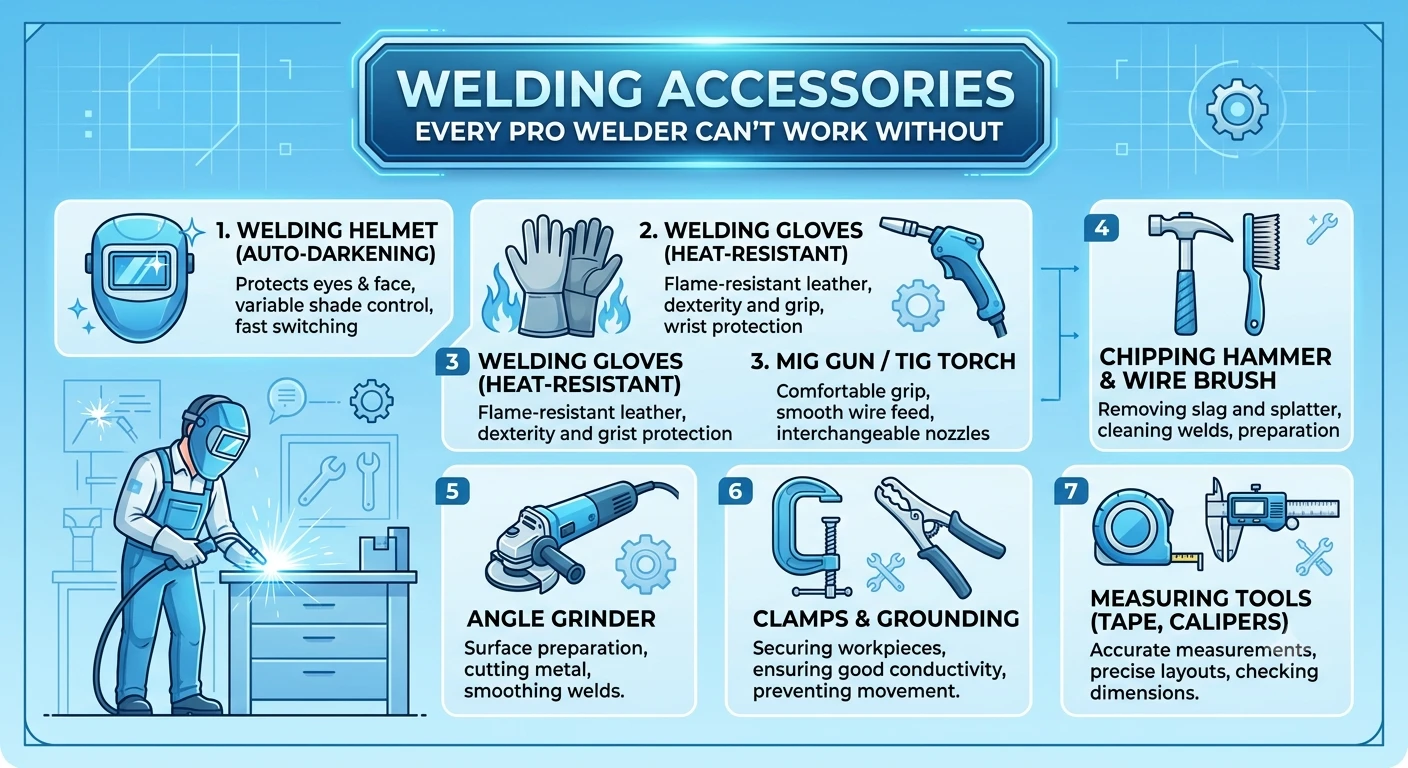
- Chipping hammers
- Wire brushes
- Electrode cleaning tools
- Clip-on tool holders
The common thread? Each reduces time spent reaching, bending, or moving around unnecessarily.
Benefits of Using Professional-Grade Welding Accessories
Enhanced Safety
- Reduces burns, sparks, and exposure to hot debris
- Keeps rods organized and away from clothing or skin
- Supports proper workflow with minimal risk of accidental injury
Increased Efficiency
- Quick rod access speeds up welding cycles
- Organized workspace reduces downtime
- Sweat management tools prevent helmet fogging or distractions
Durability & Longevity
- Cow split leather rod holders last far longer than canvas
- Cotton welding accessories are reusable and maintain shape after repeated washes
- Investing in quality accessories minimizes replacement costs
Common Mistakes Welders Make
Even experienced welders sometimes underestimate accessories. Typical errors include:
- Ignoring Rod Organization – Many welders stash electrodes in pockets or boxes, leading to contamination or lost rods.
- Skipping Sweat Management – Neglecting sweat bands or breathable headgear reduces focus and can cause helmet fogging.
- Choosing Cheap Materials – Low-quality fabric or synthetic rod holders wear out fast and offer less protection.
- Overlooking Compatibility – Accessories must complement your main PPE setup, like ensuring gaiters and rod holders work with jackets and gloves.
Avoiding these mistakes maximizes the value of your welding accessories and keeps your workflow smooth.
Practical Considerations When Choosing Welding Accessories
When selecting accessories for your setup, consider:
- Material Quality – Leather and natural cotton provide superior durability and heat resistance.
- Ease of Access – Tools and rods should be reachable without interrupting your welding rhythm.
- Weight & Comfort – Overly heavy accessories can fatigue the welder over long shifts.
- Maintenance – Accessories should be easy to clean and maintain.
Real-World Use Cases
Structural Steel Welding
On tall scaffolds, a leather welding rod holder keeps rods within reach while minimizing trips up and down ladders. Sweat bands prevent distractions from helmet fog or dripping sweat.
Pipeline Welding
Outdoor projects often involve dirt, mud, and uneven terrain. Durable rod holders and cotton welding accessories help protect electrodes and maintain hygiene in challenging environments.
Fabrication Shops
In production environments, welding accessories like chipping hammers, brushes, and tool holders streamline repetitive welds, reducing cycle times and improving consistency.
Integration with Safety Apparel
Welding accessories don’t work in isolation—they enhance the effectiveness of PPE:
- Helmets and gloves handle primary protection
- Weld protection gaiters shield legs from sparks
- Leather rod holders and cotton accessories protect lower torso and absorb sweat
For guidance on a complete, compliant setup, UNIQENT’s Safety Gear resource provides an overview of modern standards and best practices.
Expert Tips for Maximum Benefit
- Rotate rods and tools to maintain even wear in leather holders.
- Wash cotton welding accessories regularly to maintain breathability and sweat absorption.
- Inspect rod holders and gaiters for signs of wear before heavy jobs.
- Keep a minimal, organized set of tools on your belt or apron to avoid unnecessary weight.
Testimonials from Professionals
The leather welding rod holder changed the way I work. No more fumbling for rods mid-weld. — Jake L., Structural Welder
The terry cloth sweat band might seem small, but it keeps me focused for hours without helmet fog. — Maria S., Pipe Welder
Investing in proper welding accessories makes a noticeable difference in safety and productivity. — Carlos T., Fabrication Shop Supervisor
FAQ:
What counts as welding accessories?
Anything that supports welding efficiency or safety, including rod holders, sweat bands, gaiters, chipping hammers, brushes, and other small tools.
Are cotton welding accessories safe to use?
Yes. Cotton is naturally flame-resistant and breathable, making it a safe choice for sweat management and light protection.
How do I choose a welding rod holder?
Look for durability, heat resistance, ease of access, and compatibility with your PPE.
Do accessories really improve productivity?
Absolutely. Proper rod management, tool access, and comfort accessories reduce downtime and help maintain consistent welding quality.
How often should I replace accessories?
Inspect regularly. High-quality leather and cotton can last years if maintained properly, but worn items should be replaced promptly.
The Bottom Line
Professional welding is about precision, safety, and efficiency and the right welding accessories make all three easier to achieve. A leather welding rod holder, cotton sweat bands, and weld protection gaiters aren’t luxuries; they’re practical tools that improve workflow, reduce hazards, and extend the life of your electrodes and equipment.
Even the smallest accessories can create measurable improvements on the jobsite, and investing in quality gear pays dividends in safety, productivity, and peace of mind.
About the Author
Unique Enterprises Editorial Team
The Unique Enterprises team collaborates with professional welders, safety managers, and industrial experts to provide actionable guidance on PPE and welding gear. With hands-on experience in fabrication, construction, and maintenance welding, they focus on practical advice that improves safety and workflow on real-world jobsites.