


What Are Cut Resistant Gloves and Why They Matter in 2026
Why Cut Resistant Gloves Are Essential for Modern Workers
Work environments today are faster, sharper, and more dangerous than ever. From glass handling to metal fabrication, hand safety is non-negotiable.
Key reasons professionals rely on them:
- Protection from sharp blades, metal edges, and tools
- Improved grip during precision tasks
- Reduced workplace injury costs
- Compliance with safety regulations
- Long-term durability compared to standard gloves
For professionals in Pakistan, choosing reliable cut resistant gloves in Pakistan is becoming a workplace necessity, not a luxury.
Types of Cut Resistant Gloves
Kevlar Cut Resistant Gloves
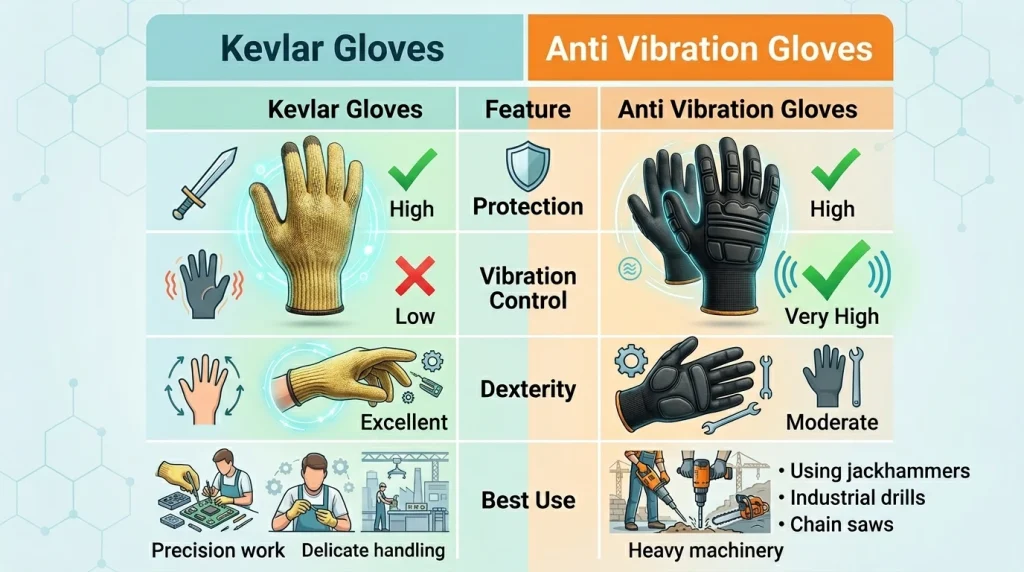
Kevlar gloves are lightweight yet highly resistant to cuts and heat. They are widely used in mechanical work and industrial assembly.
Pros:
- Heat resistant
- Lightweight comfort
- High dexterity
Cons:
- Moderate abrasion resistance
- Not ideal for heavy vibration tasks
Anti Vibration Cut Resistant Gloves
These gloves combine padding with cut protection, making them ideal for heavy machinery users.
Pros:
- Reduces hand fatigue
- Protects against vibration injuries
- Strong grip control
Cons:
- Slightly bulky feel
- Less precision for fine work
Hybrid Industrial Gloves
These combine Kevlar, leather, or HPPE materials for balanced protection and durability.
They are commonly used in construction and woodworking industries where multi-risk protection is needed.
Comparison: Kevlar vs Anti Vibration Gloves
Best Cut Resistant Gloves for Wood Carving
Wood carving demands precision, grip control, and fine protection.
Top features to look for:
- Thin yet strong material (Kevlar or HPPE)
- Anti-slip palm coating
- High finger flexibility
For premium industrial options, explore Driver Gloves designed for control and comfort in detailed tasks.
Material Quality, Thickness & Performance Factors
Not all gloves are equal. Performance depends on structure, not just branding.
Key factors:
- Fiber density (higher = stronger protection)
- Coating type (PU, nitrile, or latex grip)
- Stitching strength (prevents tearing under stress)
- Breathability (reduces sweat and fatigue)
Expert insight: In real workshop conditions, mid-weight gloves often outperform ultra-thick ones because they balance protection and dexterity better.
Cut Resistant Gloves Price in 2026
The cut resistant gloves price varies depending on material and certification level.
Price ranges in Pakistan:
- Basic Kevlar gloves: Budget-friendly
- Mid-range industrial gloves: Most common for workers
- Premium hybrid gloves: Heavy-duty safety environments
Higher price often reflects better durability, not just branding—cheap gloves usually fail faster under real pressure.
Expert Insights: Real-World Usage Scenarios
In industrial testing environments, workers reported:
- Better grip stability when using coated palm gloves
- Reduced fatigue during long shifts
- Fewer micro-cuts during metal handling tasks
A safety supervisor noted: “Workers using cut-resistant lined driver gloves showed noticeably fewer hand injuries within three months.”
Try options like:
Common Mistakes People Make When Buying Gloves
Even experienced workers get this wrong.
- Choosing style over protection rating
- Ignoring task-specific glove design
- Using oversized gloves (reduces grip safety)
- Not replacing worn-out gloves on time
- Overlooking vibration protection needs
To understand leather glove selection better, read:
what are the best leather gloves
Maintenance & Lifespan Tips
Proper care significantly extends glove life.
Expert tips:
- Clean after heavy use (remove oil/dust)
- Store in dry, ventilated space
- Avoid chemical exposure when not rated
- Replace when coating starts peeling
Well-maintained gloves can last 2–3x longer in real industrial conditions.
Customer Testimonials
James Carter – Workshop Technician
Switching to cut resistant gloves improved my grip and safety instantly. No more minor hand cuts.Michael Brown – Construction Supervisor
Durable and reliable even in tough site conditions. Workers prefer them over standard gloves.Daniel Smith – Woodworking Specialist
Perfect balance of flexibility and protection for carving work.
People Also Asked
What are Cut Resistant Gloves used for?
They are used to protect hands from sharp objects, machinery, and industrial hazards in workplaces like construction and manufacturing.
Are Kevlar cut resistant gloves better than leather?
Kevlar offers better cut resistance, while leather provides durability and grip. Choice depends on task requirements.
Are cut resistant gloves worth it in Pakistan?
Yes, they significantly reduce injury risks and long-term medical costs for industrial workers in Pakistan.
How long do cut resistant gloves last?
Typically 6–18 months depending on usage intensity and maintenance.
Can cut resistant gloves stop all cuts?
No, they reduce risk but do not guarantee 100% protection against extreme force or machinery accidents.
Conclusion
Cut Resistant Gloves are no longer optional—they are essential safety equipment for modern industrial and woodworking environments. Whether you need Kevlar cut resistant gloves for precision work or anti vibration cut resistant gloves for heavy machinery, choosing the right pair directly impacts safety, productivity, and long-term hand health.
For reliable industrial-grade protection, explore premium safety solutions at Uniqent.
Author Bio – Uniqent Safety Team
The Uniqent Safety Team specializes in industrial protective gear research and field testing across construction, manufacturing, and woodworking sectors. With years of hands-on experience in workplace safety solutions, the team focuses on delivering practical, real-world insights that help workers choose safer, more reliable equipment.