

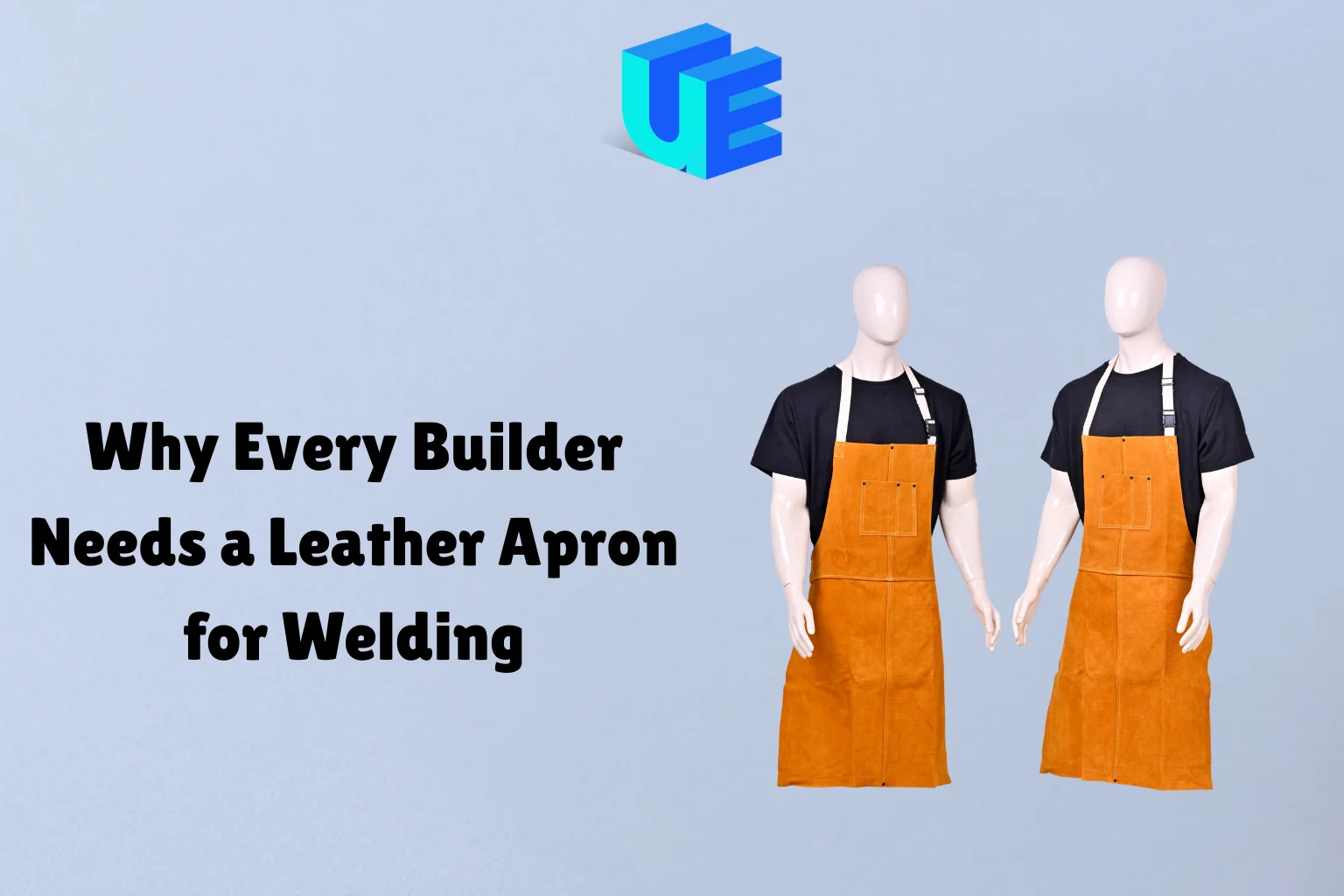
Most builders don’t think twice about sparks—until one burns through a shirt, or worse, skin. Welding heat can exceed 6,000°F, and regular workwear simply isn’t built for that reality.
A Leather Apron for Welding isn’t just another accessory—it’s your first line of defense. In this guide, you’ll discover why it matters, what to look for, and how to choose the right one for real-world job site conditions.
What Is a Leather Apron for Welding?
A leather apron for welding is a protective garment made from heat-resistant leather designed to shield the torso and upper legs from sparks, molten metal, and heat exposure. It offers durability, insulation, and long-term protection in industrial and home welding tasks.
Why Builders Need a Leather Apron for Welding
1. Protection That Fabric Can’t Match
Cotton or synthetic aprons can ignite or melt. Leather, especially cow split leather, resists sparks and minimizes burn risk.
2. Built for Heavy-Duty Work
Builders deal with grinding, cutting, and welding. A proper Welding Apron absorbs impact, resists tearing, and lasts longer than standard PPE.
3. All-Day Comfort Under Pressure
Modern designs distribute weight evenly with adjustable straps—critical for long shifts.
Material & Thickness: What Actually Matters
Not all leather aprons perform the same. Here’s what experienced welders pay attention to:
| Factor | Why It Matters |
|---|---|
| Leather Type | Cow split leather offers excellent heat resistance |
| Thickness (1.2–1.6mm) | Thicker = better protection but slightly heavier |
| Stitching (Kevlar) | Prevents seams from burning under heat |
| Coverage Length (36”) | Protects torso + upper legs effectively |
Expert Tip: For builders working daily, a 36” apron hits the sweet spot between mobility and protection.
Product Spotlight (Real-World Picks)
36″ Leather Welding Apron “79BAP-S”
- Ideal for full front coverage
- Great for heavy-duty construction environments
- Balanced weight and flexibility
Cow Split Leather Bib Apron “148LAP-L”
- Extended chest protection
- Best for industrial welders
- Reinforced stitching for durability
Cow Split Leather Bib Apron “148LAP-S”
- Lightweight option for mobility
- Perfect for light welding and home builders
- Comfortable for extended wear
Leather Apron vs Fire Resistant Sleeves
Many builders ask: Do I need both?
| Feature | Leather Apron | Fire resistant sleeves |
|---|---|---|
| Torso Protection | Full coverage | Limited |
| Arm Protection | Partial | Full arms |
| Heat Resistance | High | Moderate–High |
| Flexibility | Moderate | High |
Best Practice: Combine both for maximum safety—apron for body, sleeves for arms.
Cost vs Value: Is It Worth It?
A quality Leather Apron for Welding may cost more upfront, but:
Pros:
- Long lifespan (1–3 years with proper care)
- Reduced injury risk
- Better work efficiency
Cons:
- Slightly heavier than fabric alternatives
- Higher initial investment
Reality Check: One avoided injury easily justifies the cost.
Expert Insights
- Builders often underestimate spark bounce—molten metal can travel unpredictably.
- Cheap aprons fail at the seams first—not the leather.
- Darker leather hides burn marks better, extending visual lifespan.
From experience: A poorly fitted apron is as risky as no apron. Fit matters more than most people think.
Common Mistakes to Avoid
- Buying thin leather to save money
- Ignoring stitching quality
- Choosing the wrong size (too short = exposed legs)
- Not pairing with fire resistant sleeves
Maintenance & Lifespan Tips
- Wipe with a dry cloth after use
- Avoid soaking in water
- Store in a cool, dry place
- Condition leather occasionally to prevent cracking
With proper care, a premium apron can last years of daily use.
Real Customer Testimonials
James Carter (Texas):
I used to rely on thick cotton—big mistake. My leather apron changed everything. No more burn marks.Michael Reeves (California):
The 36-inch apron gives full coverage without feeling bulky. Worth every dollar.Daniel Brooks (Florida):
Paired it with sleeves, and now I feel fully protected on every job.
People Also Ask
1. Is a leather apron necessary for welding?
Yes, it protects against sparks, heat, and molten metal, reducing burn risks significantly.
2. What thickness is best for welding aprons?
Around 1.2–1.6mm offers the best balance of protection and comfort.
3. How long does a leather welding apron last?
With proper care, it can last 1–3 years depending on usage.
4. Can I use fabric instead of leather?
Fabric offers minimal protection compared to leather and may burn or melt.
5. Should I wear sleeves with a welding apron?
Yes, fire resistant sleeves protect arms, which aprons don’t fully cover.
Conclusion: Safety Isn’t Optional—It’s Smart
A Leather Apron for Welding is more than gear—it’s protection, performance, and peace of mind. Whether you’re a professional builder or a DIY enthusiast, investing in the right apron can prevent injuries and improve your workflow.
Unique Enterprises offers reliable, high-quality welding gear designed for real job site demands—because safety should never be compromised.
Author Bio — Unique Enterprises Team
The Unique Enterprises Team brings hands-on experience in welding safety gear and industrial protection solutions.
They specialize in durable, high-performance PPE designed for real job site conditions.
Their mission is to help builders and welders choose safer, smarter equipment every day.